What a clinic or studio website actually needs
Seven things a first-time visitor looks for before they book, the four that make them leave, and why a one-page site converts better than a five-page one for a small practice.
3 min read · free to read, no sign-up
A small practice website has one job: turn somebody who found you into somebody with an appointment. Almost every one that fails does so for the same reason — it was built as a brochure about the business rather than as an answer to the questions the visitor has in the ninety seconds before they decide.
What the visitor is looking for, in order
- 1What you do, in the words they would use. "Sports and remedial massage" beats "holistic bodywork" for a person with a sore shoulder.
- 2Where you are. A street name and a landmark, not only a postcode. Half your visitors are deciding whether it is convenient.
- 3What it costs. A site with no prices is read as expensive, and the enquiry you save by hiding them is the enquiry you lose.
- 4How long it takes and what happens in the appointment — especially for anything a first-timer would be nervous about.
- 5Who you are, with a photograph of your actual face. People book a person.
- 6Proof: reviews, qualifications, registration numbers, years open.
- 7How to book, repeated more than once, with the option they will actually use — a booking system, a phone number, or a form that goes somewhere.
The four that lose the booking
- A slow page. If a phone on mobile data takes five seconds, most people are gone before the hero image appears.
- A contact form with eight fields. Name, contact, one message box. Everything else you can ask on the phone.
- Stock photography of a spa that is not your spa. A visitor who arrives at a room that looks nothing like the picture feels misled before you have said hello.
- An opening-hours block that has been wrong since last winter.
Why one page usually wins
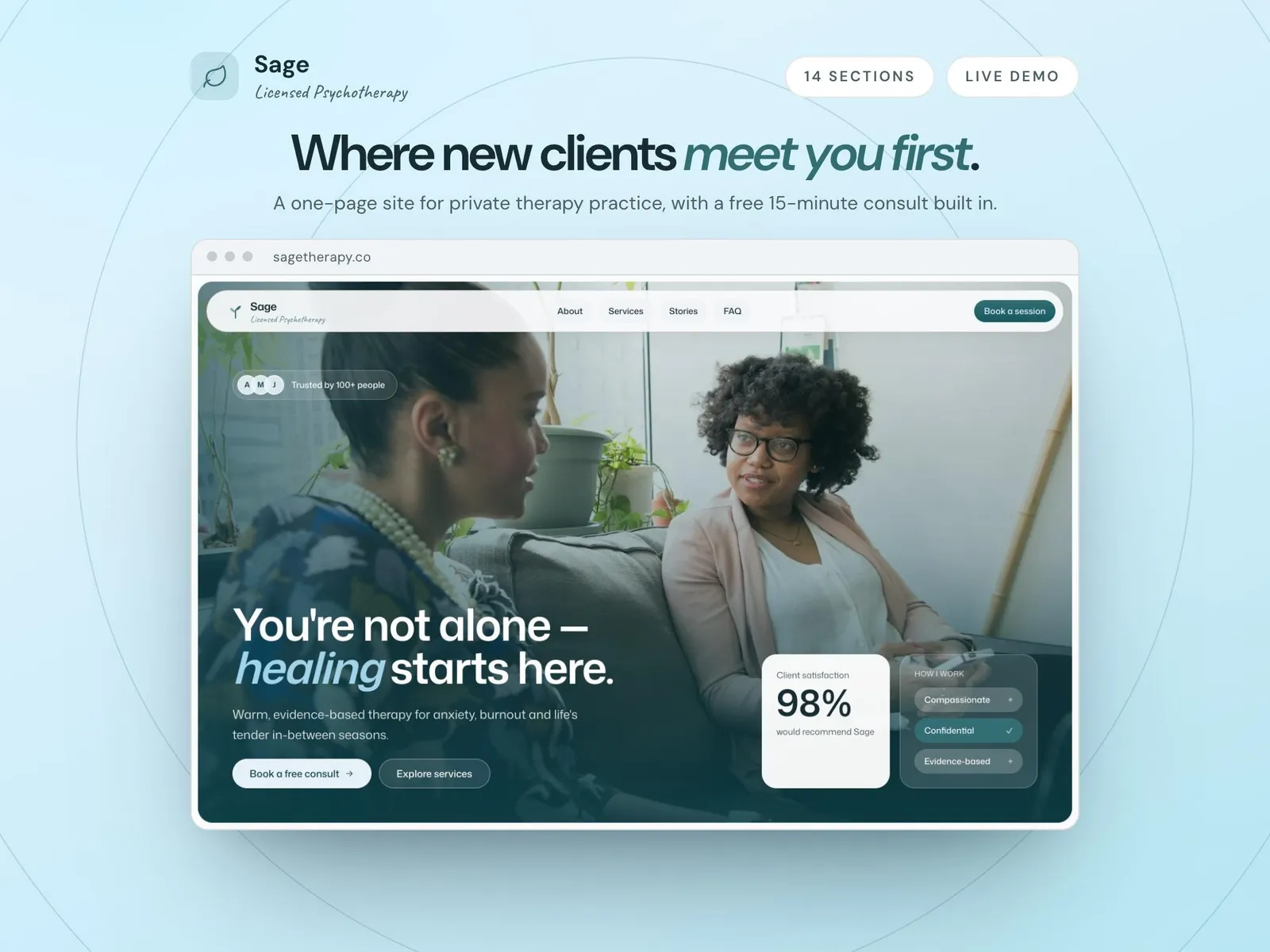
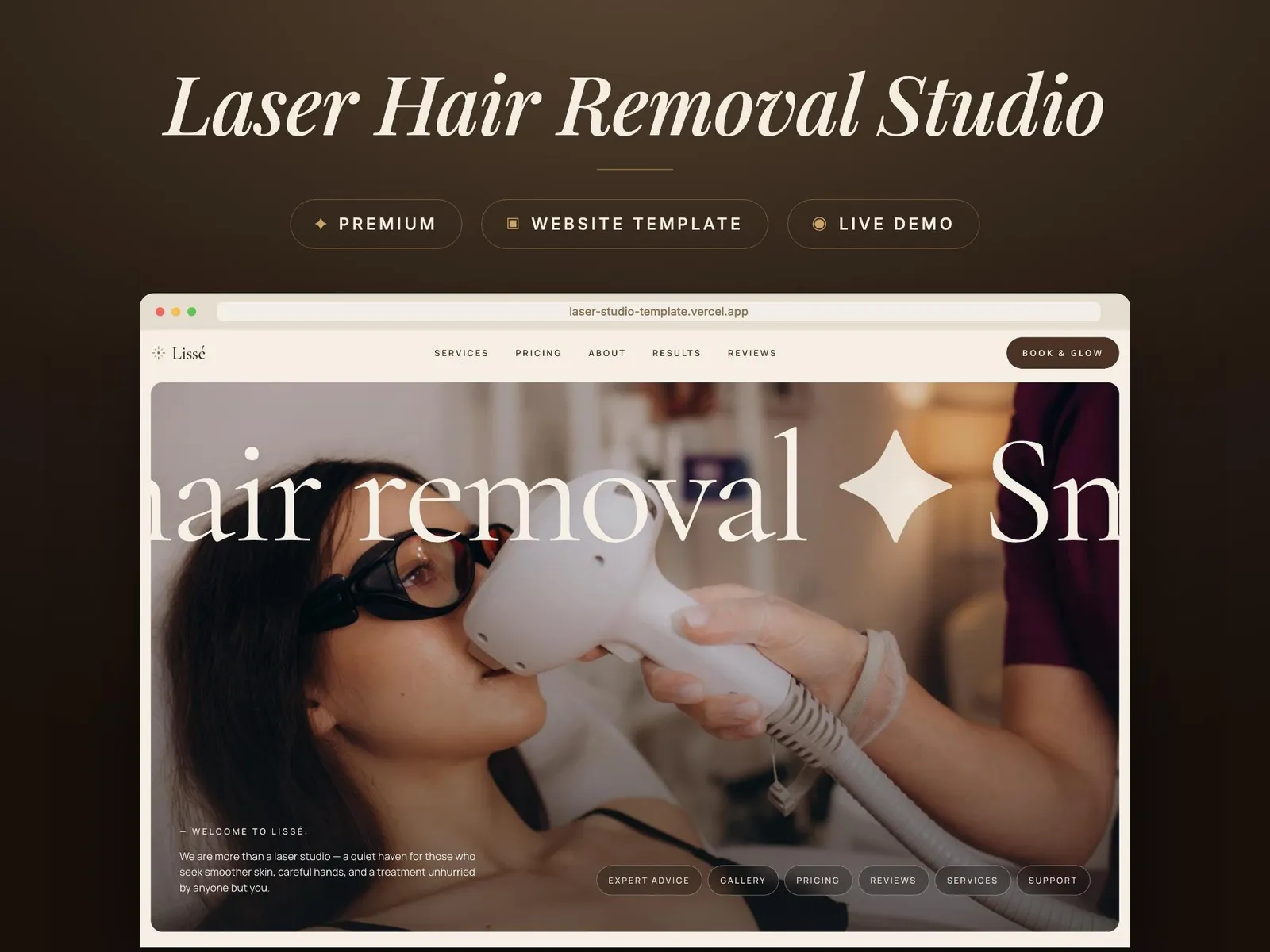
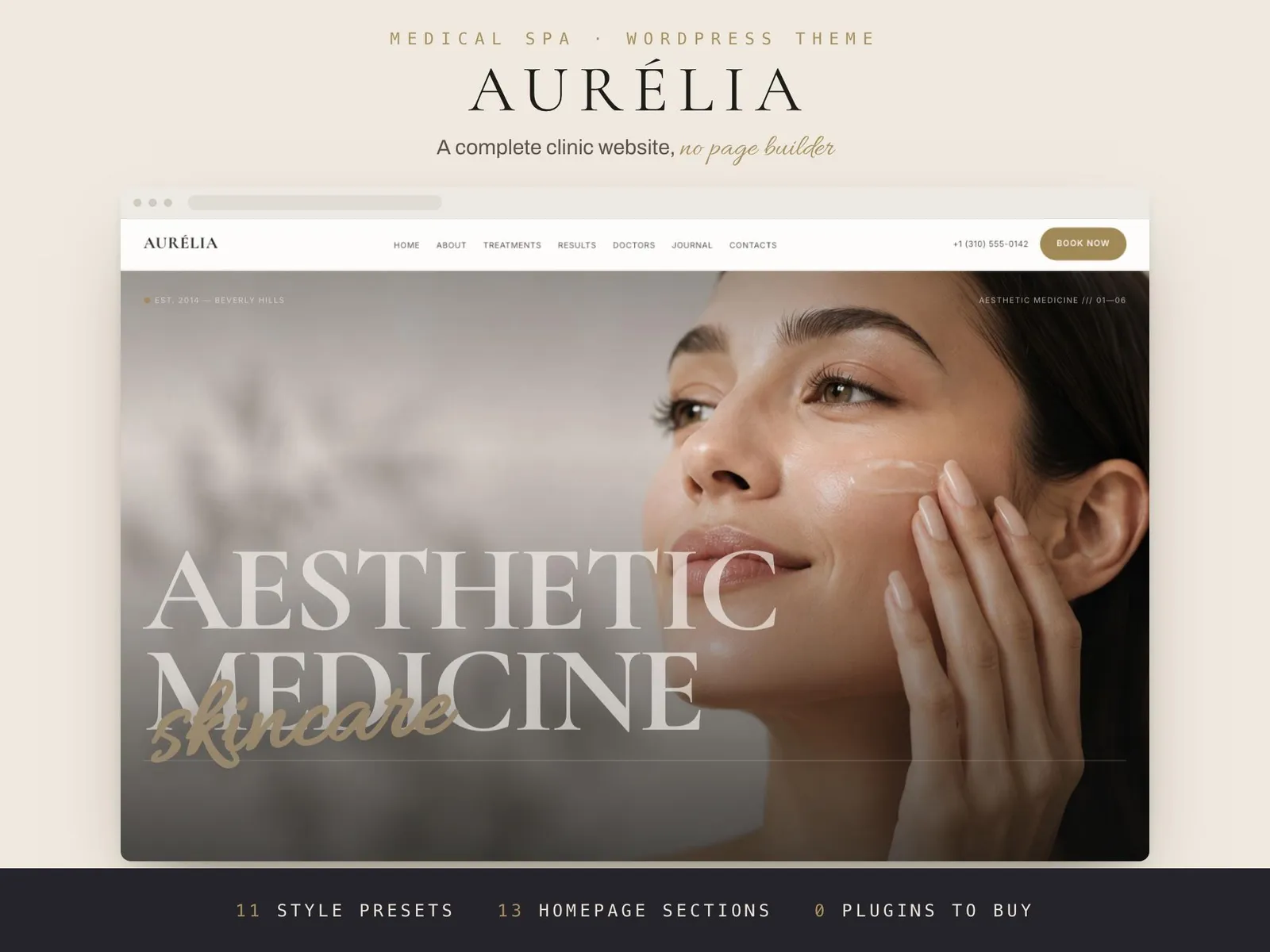
A five-page site for a practice with one practitioner splits seven answers across five clicks, and each click loses people. One page in the order above — what, where, how much, what happens, who, proof, book — lets somebody scroll to the answer they care about and reach a booking button from wherever they stopped.
It is also the version you will keep up to date, which matters more than the structure. A site with five pages has five places where the price is wrong.
The things worth doing once
- A page title that names the service and the town, because that is the search people actually type.
- Your name, address and phone written as text on the page, not baked into an image.
- A Google Business Profile, filled in properly — for a local practice it usually sends more visitors than the website's own search traffic.
- One line of structured data describing the business, so search engines can show the hours and the address.
Sets from this guide
Skip the blank page
Written for
Your line of work
- Instagram templates for massage therapistsWhat to post, and the set that does it
- Instagram templates for therapists and psychologistsWhat to post, and the set that does it
- Instagram templates for MedSpas and aesthetic clinicsWhat to post, and the set that does it
- Instagram templates for laser hair removal clinicsWhat to post, and the set that does it
- Instagram templates for dental clinicsWhat to post, and the set that does it
Keep reading