Instagram for dental clinics: what patients actually want to see
Dental accounts default to smiles and equipment. Patients are looking for something else entirely — cost, pain, and who will be in the room. A post plan that answers the real questions.
4 min readUpdated · free to read, no sign-up
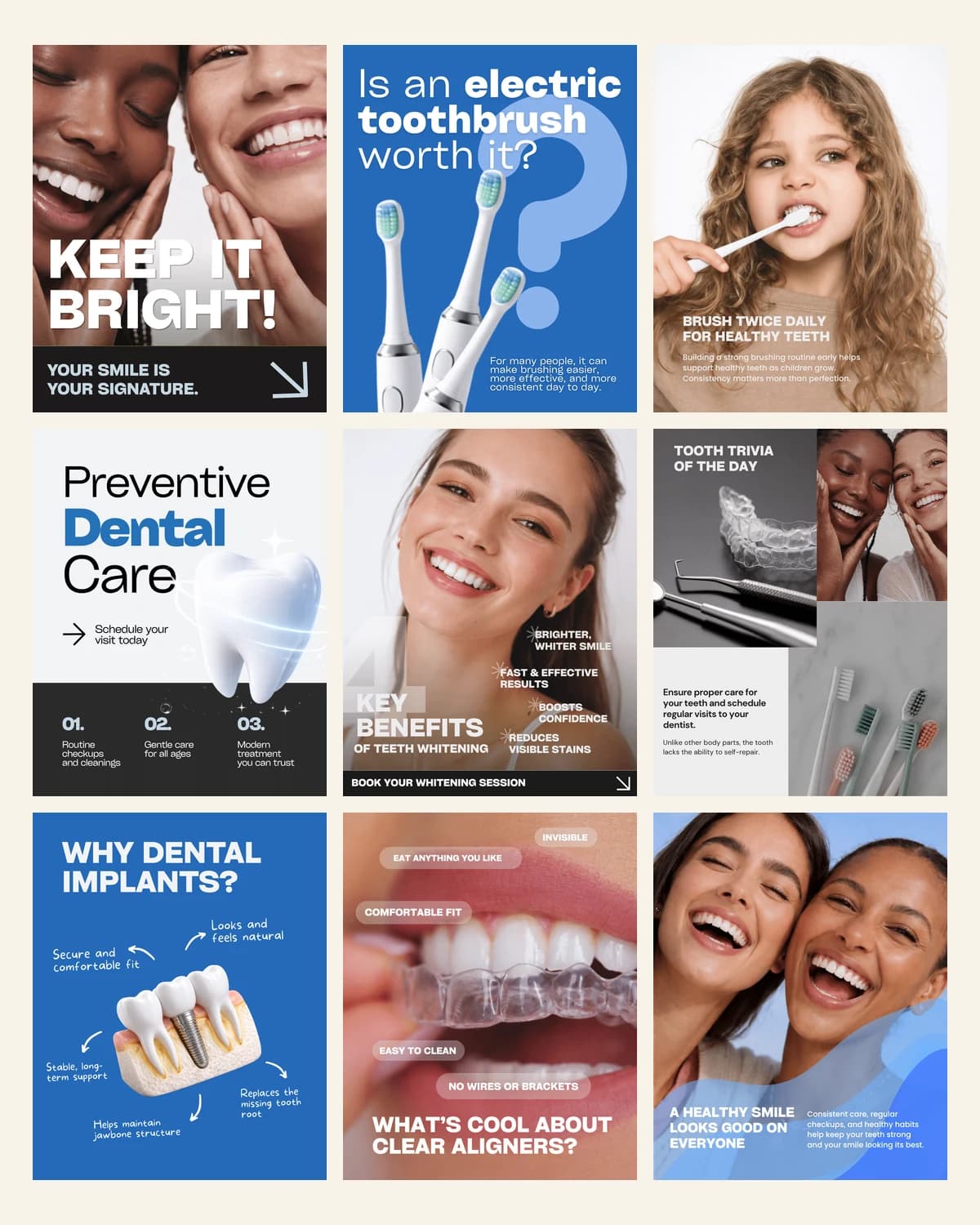
Nobody follows a dental clinic for entertainment. They follow because they need something done and are quietly frightened of it: of the pain, of the bill, of being told off for leaving it too long. Every post that removes one of those fears is worth ten photos of a new chair.
Answer the three fears, in order
- 1Will it hurt. Explain what the appointment feels like, step by step, in ordinary words. Say what anaesthetic you use and what happens if someone is anxious. An honest 'you will feel pressure, not pain' beats a promise nobody believes.
- 2What will it cost. Ranges are fine, silence is not. A price post filters out the people who were never going to book and reassures the ones who assumed it would be triple.
- 3Who will treat me. Photograph the actual dentists and nurses. A face with a name lowers the barrier to walking in far more than a stock image of a clinic that could be anywhere.
What else earns its place in the grid
- One before and after per week, with the treatment and rough timeline stated. No filters — whitening results are the first thing people accuse clinics of faking.
- A myth corrected: whitening damaging enamel, bleeding gums being normal, baby teeth not mattering.
- The hygiene routine your team wishes patients would follow, in one instruction rather than ten.
- What an emergency actually is, and what to do at 9pm when it happens.
- Practical logistics: parking, wheelchair access, whether children can come along, how to get an urgent slot.
- A short clip of the practice, walked through as a patient sees it. Fear of an unfamiliar room is real and a thirty-second video removes it.
Two rules specific to clinics
Get written consent before any patient image goes up, every time, and keep the record. And keep claims defensible — advertising rules for healthcare are stricter than for beauty, and 'painless' or 'best in the city' is the kind of wording that draws complaints in most countries.
Visually the aim is calm, not clinical. Soft colours, plenty of space, type large enough to read on a phone at arm's length. A patient who is nervous should feel the account is quiet.
The profile does more work than the posts
A dental account is rarely discovered by scrolling. It is checked. Somebody has been given your name, or has found you on a map, and is looking for a reason to book or to keep looking — which means the profile, not the feed, is what converts.
- Put the town in the account name field, not only in the bio. That field is searched; the bio text is not.
- Say what you do and where in the first bio line. "Family and cosmetic dentistry · Kingston" beats a mission statement every time.
- One link, to booking or to a page with a phone number. A link tree with nine options is nine chances to give up.
- Highlights named like questions: New patients, Prices, Nervous patients, The team. That is the FAQ a practice gets asked on the phone all day.
Keep opening hours, address and phone number identical to what is on the practice website and on your map listing. Search engines cross-check those three, and a disagreement between them quietly costs local visibility that no amount of posting will win back.
Who should actually run it
The default is whoever on reception is youngest, which produces an account that posts holiday greetings and nothing a patient needs. The better arrangement is one person doing the posting and one clinician approving anything that makes a claim — ten minutes a fortnight, not a job.
Write down the two or three things nobody posts without checking: treatment claims, prices, and any image of a patient. Everything else — the team, the building, hygiene tips, what happens at a first visit — can go up without a meeting. Practices that require sign-off on all of it end up posting nothing for four months, which is worse than an imperfect post.
Build a fortnight at a time and schedule it. Clinical days do not leave gaps for content, and an account that only gets fed when the diary is quiet will always look like one.
Still wondering
Questions
Can a dental clinic post patient photos on Instagram?
Only with explicit written consent, and your regulator may restrict it further — in the UK the GDC treats it as advertising and expects claims to be verifiable. Education-led posts avoid the question entirely and perform just as well.
What should a dental practice post about?
What happens in an appointment, what treatments cost and involve, how to look after the result, and who the team are. Fear and price are what stop people booking, so those are what a practice account should answer.
Does Instagram actually bring patients to a clinic?
It rarely converts a stranger directly. What it does is reassure someone who already found you locally and is deciding whether to call — which is most of the decision, and cheap to influence.
How often should a dental clinic post?
Twice a week is plenty. A practice account is a reference, not a feed people scroll for fun; consistency and a full profile matter far more than volume.
Should the dentist be on camera?
Faces of the team outperform stock clinical imagery every time, because the thing being chosen is a person to trust with a procedure. A short introduction post per team member covers most of the benefit.
Sets from this guide
Skip the blank page
See every set
Written for
Your line of work
Keep reading