What you can and cannot say when you advertise a treatment
Before-and-afters, prescription-only treatments, offers and testimonials: where clinic marketing usually breaks the rules, and how to write posts that still sell.
3 min read · free to read, no sign-up
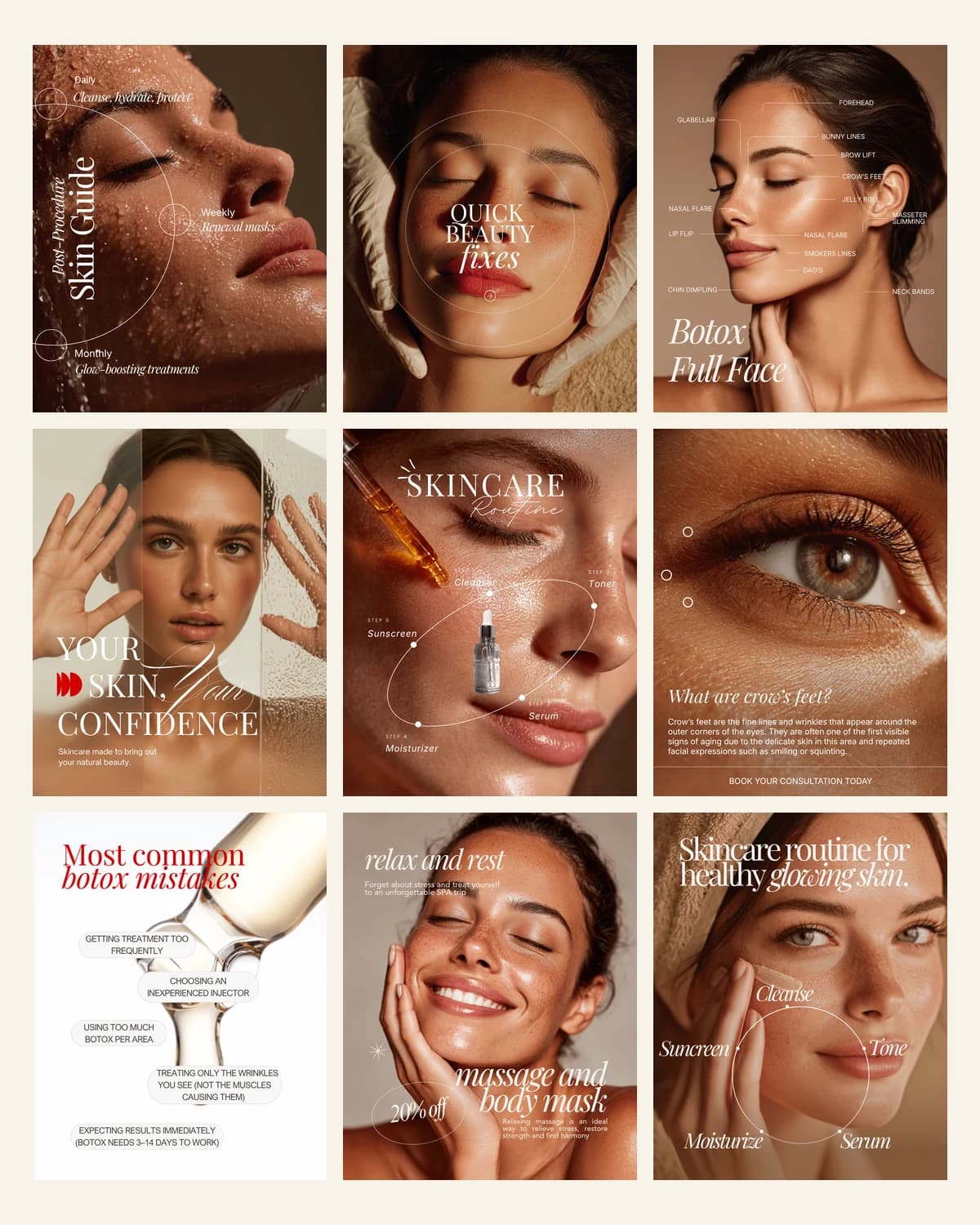
Aesthetics is the one corner of small-business marketing where the ordinary advice is actively dangerous. Before-and-afters, a discount on a slow week, a happy client's words — all of it is normal marketing everywhere else and all of it is restricted somewhere in this field.
The rules differ by country, by treatment and by who is doing it, and they move. Find your own regulator and read their guidance once, properly, then write the summary into a note you keep next to your content plan. Nothing below replaces that.
Where clinic marketing usually goes wrong
- 1Advertising prescription-only treatments to the public. In a lot of places this is not a grey area at all — naming the product in a public post is the breach, whatever the caption says around it.
- 2Before-and-after photographs. Restricted for some treatments, and where allowed they usually need the same lighting, angle and time interval, with no filter and no retouching.
- 3Time-limited offers and discounts on medical procedures. Pressure selling is what most regulators object to, not the price.
- 4Testimonials about a treatment's results. Widely restricted, even when the client volunteered them and means every word.
- 5Claiming an outcome. "Removes", "cures", "permanent" and "guaranteed" are the words that turn a description into a claim you have to be able to prove.
What still works, and is safe nearly everywhere
- The consultation: what happens, how long it takes, what you check, what you will refuse to do.
- Aftercare — the most saved and shared content in this trade, and it contains no claims at all.
- Who you are: qualifications, registration, insurance, how long you have practised, where you trained.
- The room, the equipment, the hygiene routine. It answers the fear people actually arrive with.
- Education about the area you work in, written so it explains rather than sells.
- The honest post about what a treatment cannot do. It builds more trust than any photograph.
Writing the words themselves
Describe rather than promise. "A course of six sessions, three weeks apart" is a description; "clear skin in six weeks" is a promise you now have to defend. Keep the outcome language in the consultation, where it belongs to one person and their own case.
Avoid comparisons with other clinics, avoid anything aimed at people under eighteen, and never imply a treatment fixes a lack of confidence. Regulators look hardest at exactly that framing, and it is the framing that ages worst anyway.
Keep the paperwork
Where you do use a photograph, keep the client's written consent with the date, what it covers and where it may be shown — and honour a withdrawal of consent quickly, including in old posts. Keep a copy of the guidance you relied on and note when you last checked it, because "we did not know it had changed" is not a defence anybody accepts.
None of this makes a clinic account boring. It makes it the one in the feed that reads like a practice rather than a sale, which is the account people book with.
Sets from this guide
Skip the blank page
See every set
Written for
Your line of work
Keep reading