Instagram for aesthetic clinics: what makes someone book an injector
Aesthetic patients choose a practitioner, not a clinic, and they decide from an account before they ever ring. Here is what to post when before-and-afters are restricted, and what stops an enquiry turning into a booking.
4 min read · free to read, no sign-up
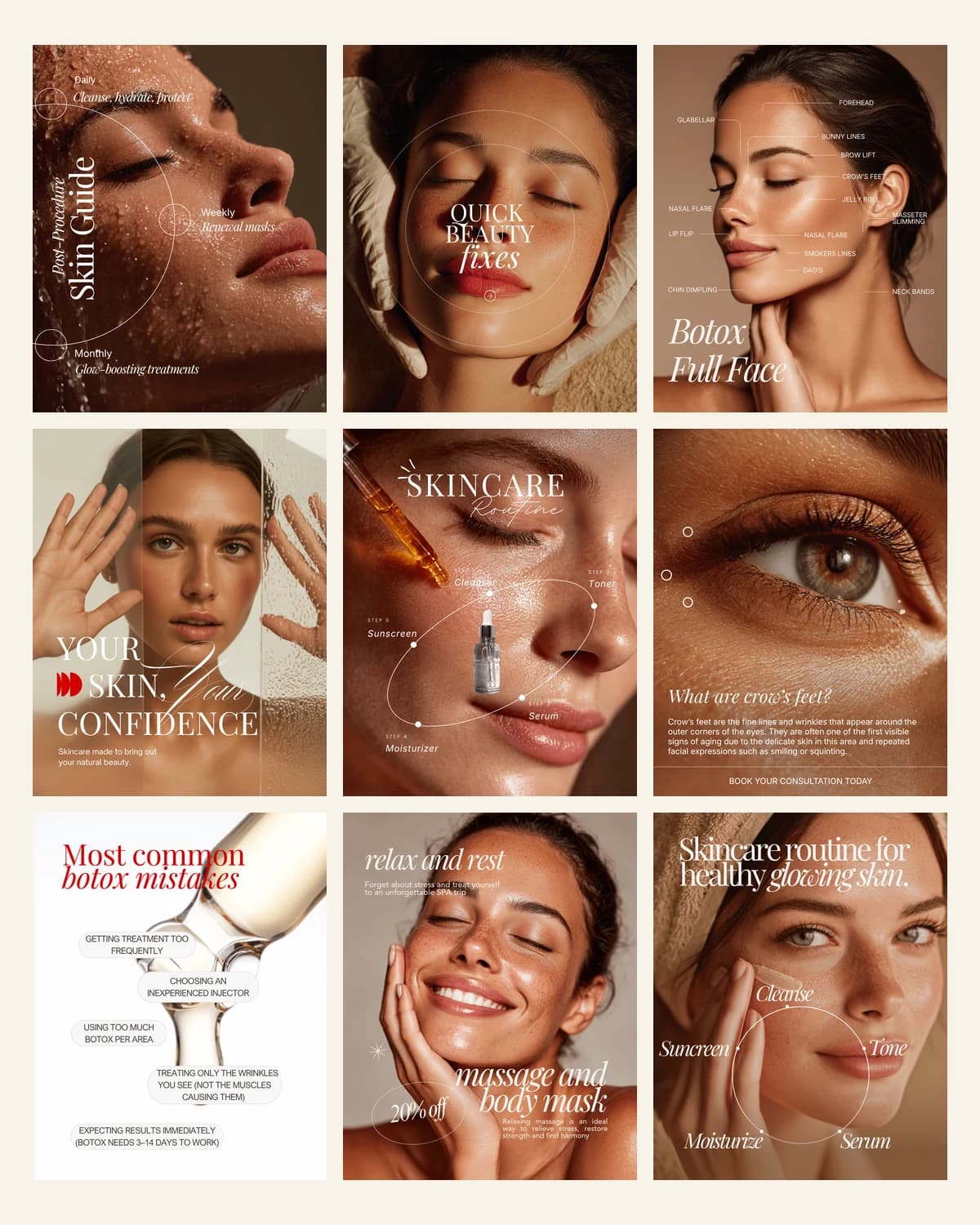
Nobody books tox from a stranger because the grid was pretty. They book because they have watched somebody explain a treatment clearly enough that the fear went down, and because that person looked like they would say no if the answer should be no. That is the whole job of an aesthetic account, and most of them are doing something else entirely.
The account is choosing a person, not a clinic
Clinic branding matters far less here than in dentistry or physiotherapy. The patient is handing their face to an individual, so the individual has to be visible: who treats, what they trained in, how long they have practised, and what they will not do. Practitioners who post under a clinic name and never appear are competing on price, because there is nothing else to compare.
That does not mean daily face-to-camera video. One good introduction, a photograph you are happy with, your qualifications stated plainly, and a habit of answering questions in your own voice is enough to be a person rather than a logo.
Teach the treatment, not the offer
Every enquiry an aesthetic clinic receives contains the same three questions, and an account that answers them in public gets fewer time-wasting messages and more bookings: does it hurt, how long does it last, and what will I look like tomorrow.
- Say what a treatment does anatomically, using the face-mapping style of diagram rather than a photograph. It is shareable, it is educational, and no consent form is involved.
- Say what downtime actually means in days, not in reassurance. Somebody with a wedding in a fortnight is doing arithmetic, and vagueness loses them.
- Say who a treatment is not for. It reads as competence and it filters out the consultations you were going to decline anyway.
- Say what it costs, or the range. Aesthetic pricing is the single most-searched thing about any clinic and the most commonly hidden.
Before-and-afters, and the rules around them
In the UK and much of the EU, promoting prescription-only injectables to the public is restricted, and before-and-after imagery of them sits inside that restriction. Rules differ by country and by regulator, they change, and social platforms have their own policies on top. Check what applies to you rather than copying what a bigger account is doing — a large following is not evidence that somebody is compliant.
Where you can post results, treat them as clinical documentation rather than as marketing: same angle, same lighting, same expression, no filter, and consent in writing that names Instagram specifically. A result photographed under a ring light at a flattering angle is not a result, and patients recognise the trick faster than clinics think.
Where you cannot, the account still works. Education, the practitioner, the room, aftercare and honest answers about downtime fill a grid perfectly well, and they attract the cautious first-timer who is the most valuable patient a clinic gets.
The consultation is the conversion point
Most aesthetic accounts push straight from post to booking and lose the people who are not ready. The step in between — a consultation, paid or free, in person or on a call — is what converts somebody nervous, and it is barely ever mentioned in the content.
Post what a consultation involves: how long, what you assess, whether you can be treated the same day, and whether the fee comes off the treatment. People do not book a consultation because they do not know it is a thing that exists, and they will not ask.
A rhythm that survives a clinic day
Two posts a week, built in one sitting a fortnight, beats an ambitious schedule that dies in the first busy week. Clinic days do not leave gaps, and an account that is only fed when the diary is quiet advertises exactly that.
Keep one rule: nothing that makes a claim goes up without the treating practitioner reading it. Everything else — the room, aftercare, the team, general education — can be scheduled by whoever builds the posts. Clinics that require sign-off on all of it post nothing for a season, which costs more than any individual post ever could.
Still wondering
Questions
Can aesthetic clinics post before-and-after photos on Instagram?
It depends on your regulator and on the treatment — promoting prescription-only injectables to the public is restricted in the UK and much of the EU, and platform policy sits on top of that. Check what applies to you rather than copying a larger account.
What should an aesthetic clinic post instead of results?
Treatment explainers, anatomy-style diagrams, downtime in days, aftercare, and the practitioner. Those answer the three questions in every enquiry — does it hurt, how long does it last, what will I look like tomorrow.
Should the injector show their face?
Yes. Patients are choosing a person to inject their face, not a clinic name. One good introduction, your training stated plainly, and answering questions in your own voice is enough — it does not need daily video.
Do aesthetic clinics need to post prices?
A range at minimum. Price is the most-searched thing about any clinic and the most commonly hidden, and hiding it mostly generates enquiries that never book.
How often should a clinic post?
Twice a week, built a fortnight at a time. Clinic days leave no gaps, and an account that only gets fed when the diary is quiet tells people exactly that.
Sets from this guide
Skip the blank page
See every set
Written for
Your line of work
Keep reading