What to post as a lash or brow artist to fill your books
Before-and-afters alone will not fill a week. Here is what lash and brow artists should post instead, how to photograph work so the retention actually shows, and the three posts that turn a follower into a booking.
5 min readUpdated · free to read, no sign-up
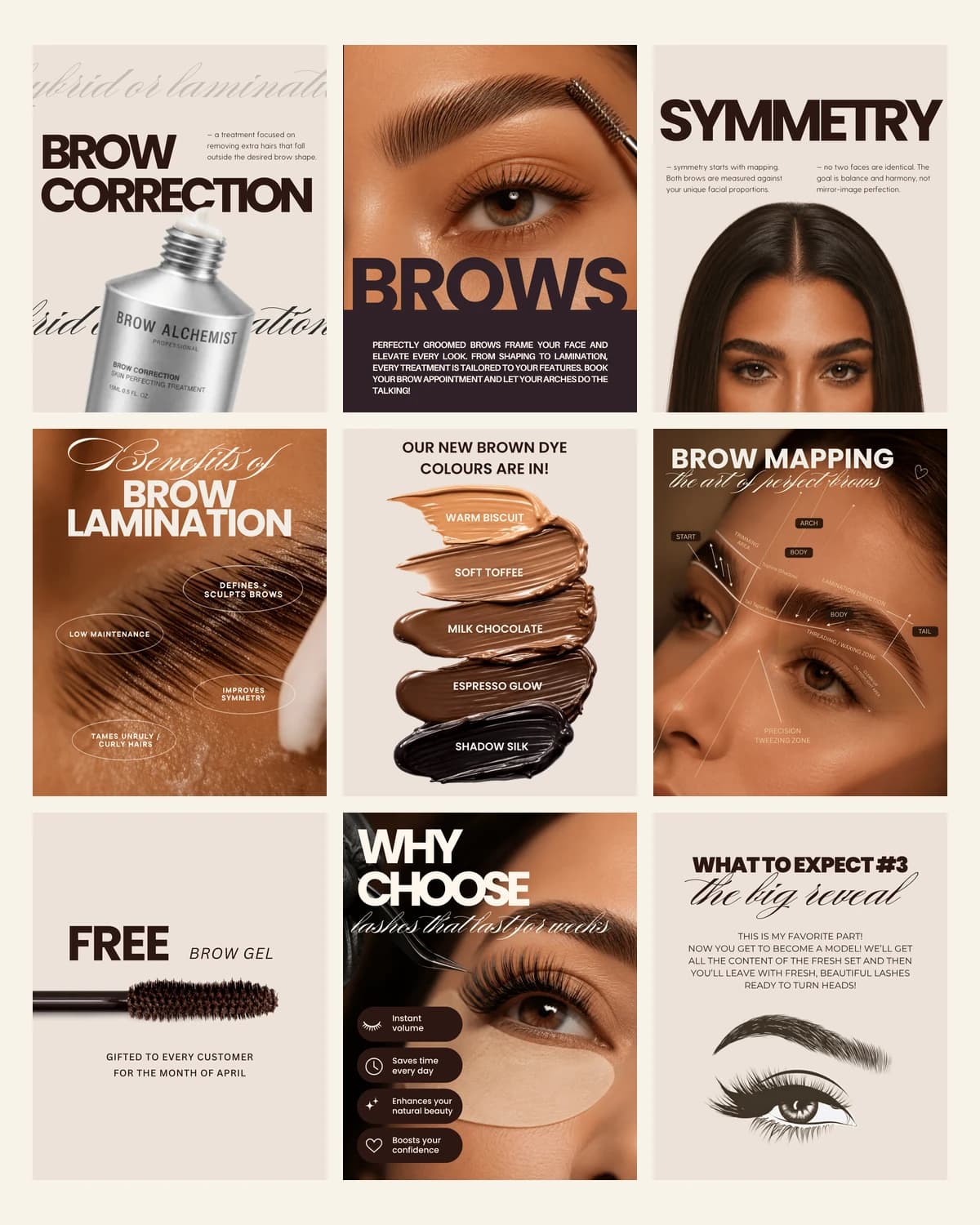
Almost every lash account posts the same thing: a close-up of finished work, a heart emoji, a booking link in the bio. It is not wrong, it is just incomplete. A close-up proves you can do the set. It does not tell anyone what it costs, how long it takes, whether it will suit their eye shape, or why they should not go to the cheaper studio two streets away.
Photograph the work properly first
- Shoot with the eye closed and the chin slightly lifted. It shows the lash line and the curl instead of the client's ceiling.
- Use one light source near a window, never the ring light straight on. Flat light flattens the fan and the set looks thinner than it is.
- Take the before photo in the same position as the after. Different angles read as a different person and the transformation stops being believable.
- Wipe the mirror, tidy the headrest, remove the tissue. The background is half of what people judge hygiene by.
The posts that get people to book
Rotate these through the month alongside your work photos. Each one answers a question people are too polite to ask in the DMs:
- 1Price, said plainly. A post with your services and numbers on it. Nothing kills an enquiry faster than having to ask, and nothing wastes your time faster than an enquiry that leaves when it hears the price.
- 2How long it takes. First set, infill, removal. People are budgeting an afternoon and do not know it.
- 3Aftercare, as a rule of thumb. What to do in the first 24 hours, how to wash them, what ruins them. This is the post people save and send to friends.
- 4Who a style suits. Classic against volume against a hybrid, matched to eye shape rather than to trend names nobody outside the industry knows.
- 5Retention proof. The same client at week three. It is the single most persuasive post in this industry and almost nobody takes it.
- 6You, working. A short clip of the hands, the tools, the isolation. It sells care more than any finished photo does.
The two habits that cost bookings
The first is posting only when you have a stunning set. Quiet weeks are exactly when the account needs to run, and quiet weeks are when a price post does most work. The second is hiding the booking step: a link in the bio is not an instruction. Say it in the post — how far ahead you book, what the deposit is, whether you have anything this week.
A template set is not what makes the work good. It is what stops the feed looking like a camera roll — same layout for the price post every month, same frame around every before and after, so a stranger scrolling sees a studio rather than a person with a phone.
Turning a message into a booking
Most lash and brow enquiries die in the DMs, and they die at the same three points every time. Fixing those is worth more than any amount of extra posting, because the person messaging you has already decided they want the treatment.
- "How much is a full set?" answered with a number and nothing else. Add the next sentence — how long it takes, what is included, and the booking link. A price with no context reads as expensive.
- A question you answer six hours later. Nobody is loyal at the enquiry stage; they message three accounts and book the one that replies. If you cannot reply in the chair, set an away message that names when you will.
- A conversation that ends with "let me know". You know, they do not. Offer two specific times and let them pick one.
Saved replies in the Instagram app cover most of this. Three of them — price and booking, aftercare, and are you taking new clients — will handle the majority of a week's messages without you writing another word.
Your first month with no portfolio
Every new artist hits the same wall: you need photos of work to attract clients, and clients to produce photos of work. The way through it is to stop trying to look established and post the thing a nervous first-time client actually wants, which is not a portfolio.
Post what the appointment is like. How long they will lie there, whether it hurts, what happens if they hate it, how to arrive — no lashes, no makeup, no caffeine. Post the products you use and why you chose them. Post your training. None of that requires a single before-and-after, and all of it answers a question that stops people booking.
For the work itself, model on friends and on yourself, and say so plainly rather than implying a client list you do not have. People forgive a new artist being new; they do not forgive a feed of stock lash photos that looked nothing like what they got.
Still wondering
Questions
How do I take good before-and-after photos for lashes and brows?
Same angle, same distance, same light, both times. Daylight near a window beats a ring light for skin. The change reads as a result only when nothing else in the frame has changed.
Do I need my client's permission to post their photo?
Ask every time, and get it in writing where you can. A photo of someone's face is theirs; a one-line consent in your booking form saves an awkward conversation later.
How do lash artists get bookings from Instagram?
By making the next step obvious and repeating it. Booking link in the bio, the same call to action on every service post, and prices or a from-price visible somewhere — most people who do not enquire simply did not know how to.
What should I post when I have no new clients that week?
Aftercare, retention tips, the difference between two treatments, or a myth people believe. Educational posts age well and can be re-shared next season, which is what makes a quiet week worth posting through.
Should I show my prices on Instagram?
Show a from-price at minimum. Hiding cost filters out the people who would have booked as often as it filters out the ones who would not, and it costs you a DM each time.
Sets from this guide
Skip the blank page
See every set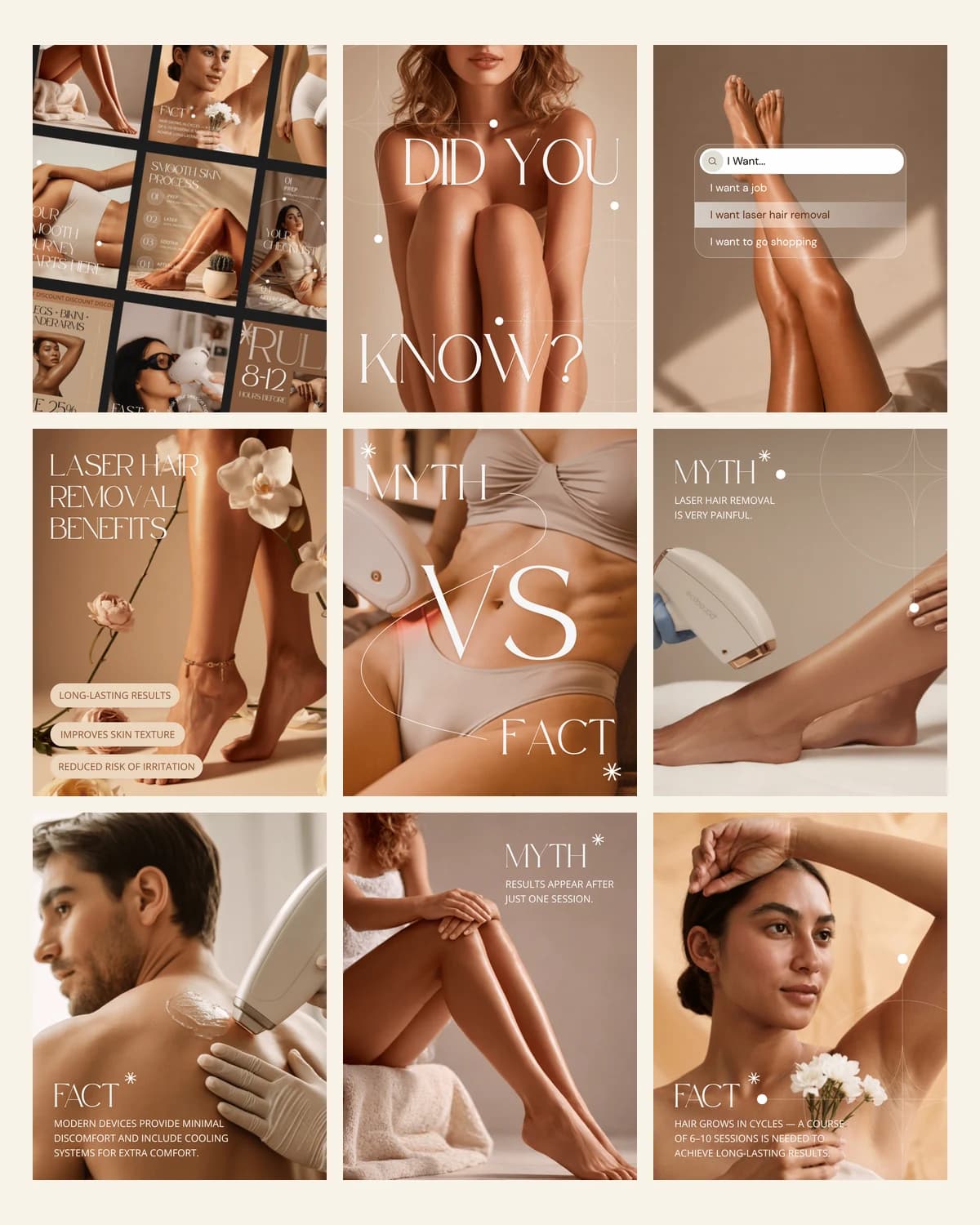
Written for
Your line of work
Keep reading