Instagram for massage therapists who are not selling relaxation
Everyone posts a candle and a folded towel. What actually fills a diary: naming the problem you treat, showing the room, and making the booking step obvious — without claiming to cure anything.
5 min readUpdated · free to read, no sign-up
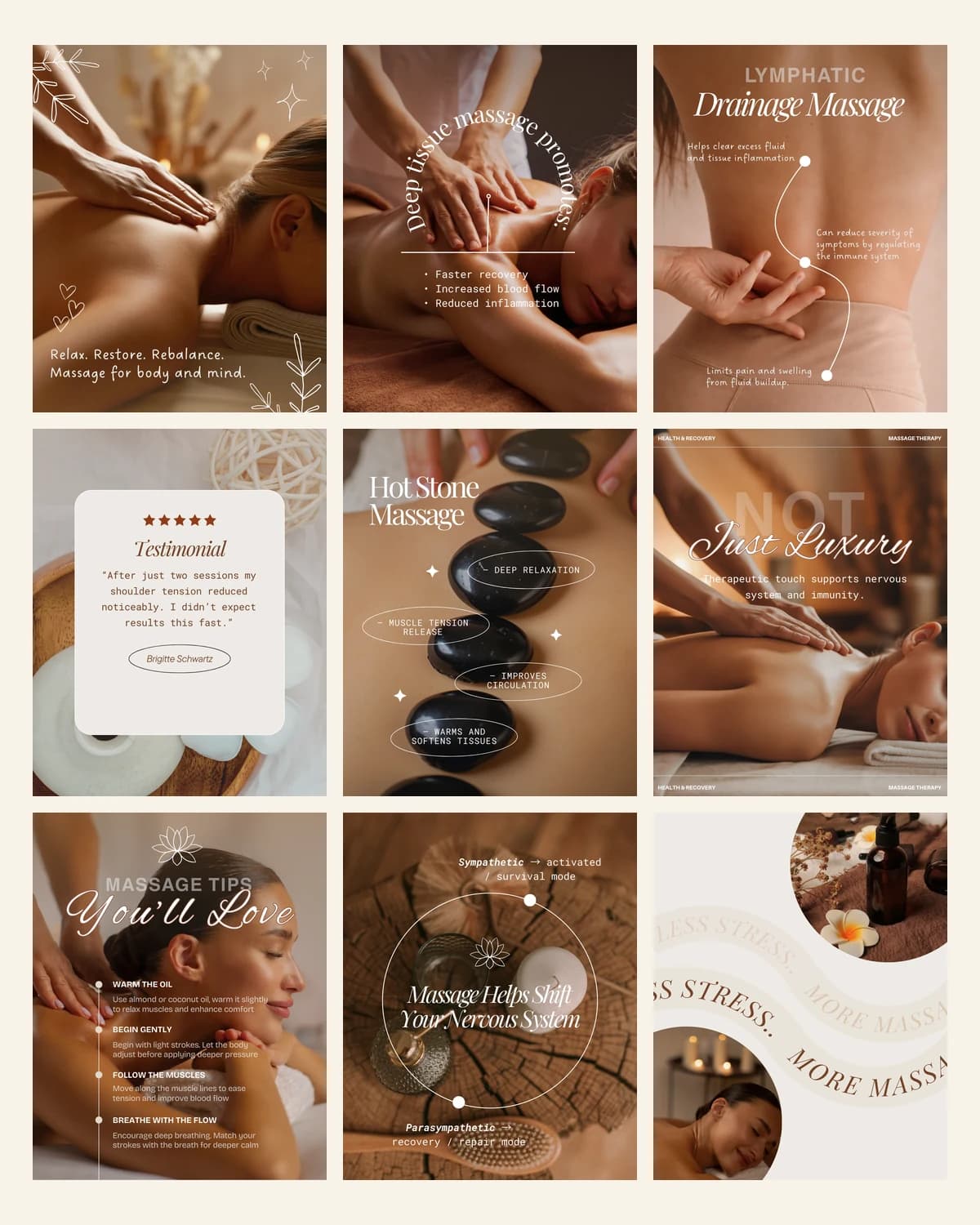
A massage account competes with every other massage account for the same picture: a dim room, a candle, hands on a shoulder. Nobody books from that, because it says nothing a hundred other studios have not already said. People book when they recognise their own problem in your words.
Post the problem, not the treatment
Somebody does not wake up wanting deep tissue work. They wake up unable to turn their head. Write the post from that end: the symptom, what usually causes it, what a session does about it, how many sessions it normally takes. The treatment name belongs at the bottom, not the top.
- Neck and shoulders after a week at a laptop — what to expect from the first session.
- Why your lower back hurts more on rest days than on gym days.
- Sports massage before an event versus after it, and why they are not the same appointment.
- Pregnancy massage: what changes, from which trimester, and what you need from a doctor first.
- Headaches that start at the base of the skull.
Careful with claims
Say what a session does, not what it cures. “Relieves tension” and “clients report sleeping better” are honest. “Treats sciatica” and “detoxes the body” are medical claims — they attract complaints, and in several countries they breach advertising rules for therapists.
The same care applies to before-and-after photos of bodies. Skin, bruising and posture shots need written consent from that specific client for that specific use, and they age badly as marketing. A quote from a review carries the same weight with none of the risk.
Show the room, not only the hands
Anxiety about a first massage is mostly about the unknown: what to undress, where to put your things, whether it will hurt, whether you have to talk. Post the answers as a series and the first-session objections disappear before anyone asks. Photograph the actual room in daylight — a clean, plain, real room outperforms a stock spa every time.
One booking step, repeated
Every third post should end with the same instruction: the link in the bio, the day you answer messages, how far out you are booked. Rotating between five different calls to action teaches people that nothing in particular is expected of them.
Intake paperwork is worth a post of its own. Telling somebody the form takes two minutes and arrives before they come in removes the last thing between an interested reader and a booking.
A month that repeats without looking repetitive
- 1Week one: one symptom explainer, one photo of the room, one booking prompt.
- 2Week two: a treatment compared with a treatment, a review quote, a story poll about what people want covered next.
- 3Week three: an aftercare post, a myth corrected, an availability update.
- 4Week four: something human — a certificate, a course, why you started — and the booking prompt again.
Putting prices where people can see them
Therapists hide prices more than almost any other trade, usually out of a worry that a number without a conversation sounds expensive. What actually happens is that the person books somewhere that published one, because comparing two treatments where only one has a price is not a comparison.
Publish the standard treatment lengths and what each costs, and put them somewhere permanent — a highlight, a pinned post, the link in the bio. If your prices vary by therapist or by time of day, publish the range and say what moves it.
- Sell blocks of sessions rather than discounts. Six for the price of five is a plan; twenty per cent off in January is a habit your regulars will wait for.
- Name what a longer session buys, in minutes on the area that hurts. People do not upgrade to spend more, they upgrade to fix the thing.
- Say what is included — consultation, aftercare advice, the fact that the hour is an hour on the table and not fifty minutes.
Getting reviews without the awkwardness
The end of a treatment is the worst moment to ask: the client is horizontal, half asleep and reaching for their shoes. The right moment is a few hours later, by message, when they have noticed that their neck turns further than it did.
Ask once, ask specifically, and give them the link. "If the shoulder feels better tomorrow, would you mind leaving a line about it here?" produces a usable review. "Please leave us a review" produces five stars and no words, which convinces nobody reading.
Then use them. A quoted line from a client about a specific complaint, set in the same layout as the rest of your posts, is the single most persuasive thing a treatment account can put in a grid — and unlike a testimonial page, it appears in front of people who were not looking for one.
Still wondering
Questions
What should a massage therapist post instead of relaxation photos?
The problem, not the treatment: what a stiff neck from desk work does, what a session changes, who a modality suits. Candles say nothing about whether you can help.
How do massage therapists fill a diary with Instagram?
One booking step repeated on every post, plus posts that name a specific complaint. People book when they recognise themselves in the description, not when they admire the room.
Can I make claims about what massage treats?
Keep to what your training supports and to how people usually describe feeling afterwards. Avoid curing, healing and medical claims — they are the fastest way to a complaint and add nothing to a booking.
Should I post client photos or treatment videos?
Only with consent and only where nobody is identifiable. Hands, the room and a short technique clip do the same work without asking anything of a client on a table.
How do I post consistently when I am fully booked?
Build a fortnight in one sitting and schedule it. The weeks you are too busy to post are exactly the weeks the diary empties three months later.
Sets from this guide
Skip the blank page
See every setWritten for
Your line of work
Keep reading