Instagram for yoga teachers who would rather be teaching
Posting a handstand does not fill a class. What does: a clear schedule, one useful cue a week, and enough of you that a beginner knows the room is safe. A month of posts that takes an hour to plan.
4 min readUpdated · free to read, no sign-up
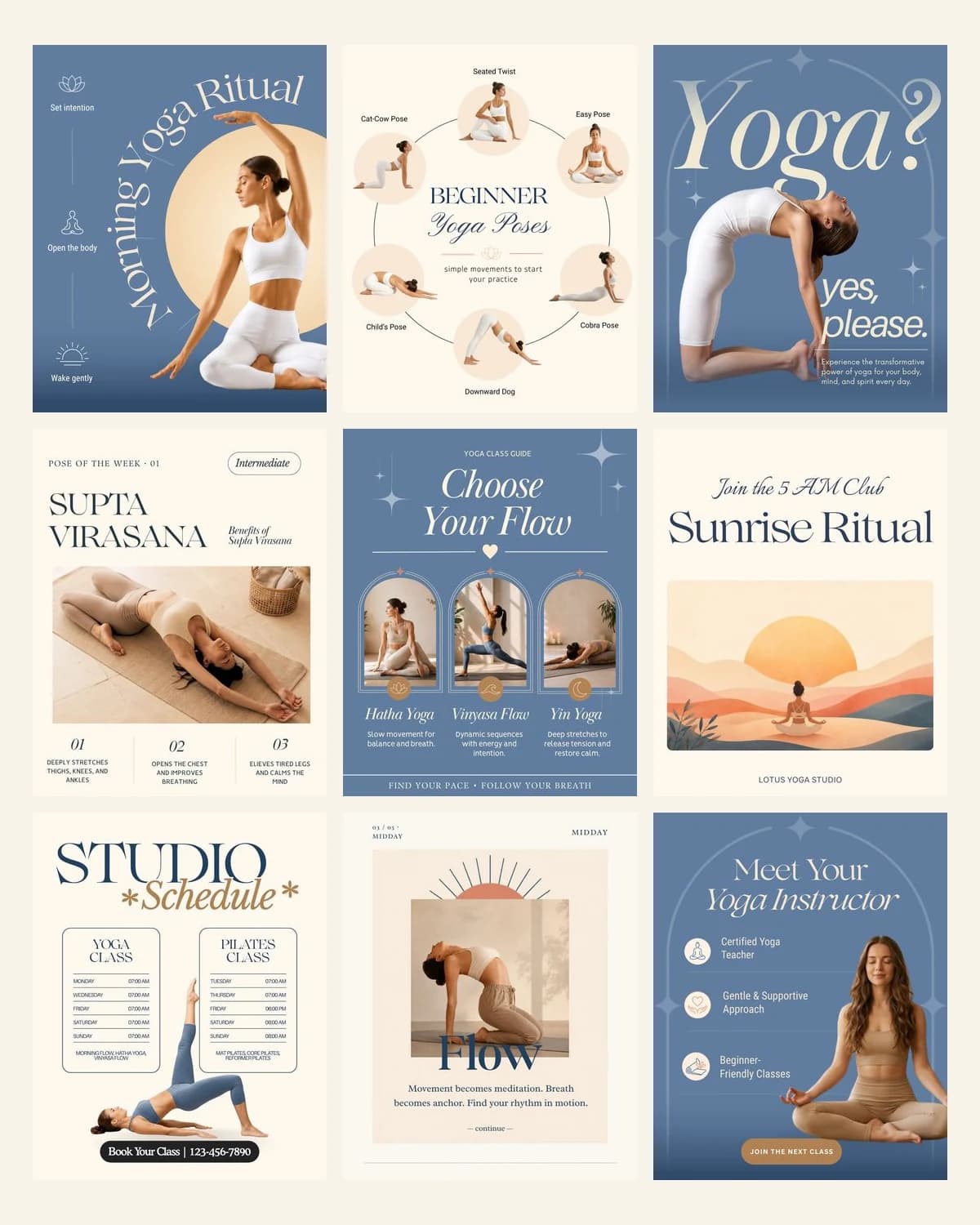
Advanced postures perform well and convert badly. The person who books a class is usually stiff, slightly self-conscious and worried about being the worst one there. An account full of impressive shapes confirms exactly the fear they arrived with.
The four posts a class needs
- 1The schedule, posted weekly. Day, time, level, where. Most missed bookings are not a marketing problem — people simply do not know when you teach.
- 2One cue, explained. A single adjustment that makes a common pose feel different. This is the post that proves you can teach rather than perform.
- 3Who the class is for. 'Beginners, tight hips, desk backs' does more than 'all levels welcome', which everyone writes and nobody believes.
- 4The room itself. Props, floor, how full it gets, where to leave shoes. Familiarity is what gets a nervous beginner through the door.
Filling out the month
- A two-minute sequence for something specific: after a run, before sleep, at a desk.
- What a term you use actually means — pranayama, vinyasa, savasana — in plain language.
- Why you stopped doing something you used to teach.
- A student's progress, shared with permission, measured in how they feel rather than what they can bend into.
- The playlist, the tea, the small ritual that makes your class yours.
- A direct invitation once a week: what is open, what it costs, how to book.
Keep it calm on the eye too
The mistake is treating the feed like a fitness account: high contrast, shouting type, arrows and circles. Warm neutrals, generous space and one readable headline per post do more for a yoga practice, because the grid should feel like the room feels.
Plan the month in one sitting, batch the images from one shoot, and let the layout stay the same. Consistency is what makes a small account look established — not volume.
Describe a class so a beginner turns up
The people most likely to book are the ones most likely to be intimidated, and yoga accounts are written for the ones who already practise. Sanskrit in the class title, a photo of a bind, and no mention of what to bring is a door with no handle on it.
Write the class description the way you would explain it to a friend who has never been. What happens in the first five minutes. Whether there is chanting. How hot the room is in numbers. Whether anyone will touch them, and how to say no if they would rather not. What to wear and what the studio lends.
- Name the level in plain words: "suitable if you have never done yoga" travels further than "all levels welcome", which everybody writes and nobody believes.
- Say how long it runs and when it ends, because the honest obstacle is usually the school run, not the practice.
- Show the room empty. A beginner is picturing themselves in it, and that is easier without eleven people in a headstand.
When the timetable changes
A schedule change is not an administrative announcement, it is the most-read post you will make that month — and it is where studios lose regulars quietly. Post it three times: when it is decided, the week it starts, and the morning of the first class in the new slot.
Repetition feels excessive from the inside. From the outside, a follower sees perhaps a third of what you post, so three posts is closer to one. Pin the current timetable to the top of the profile and update the pinned post rather than adding a new one each term, so the wrong times are never sitting there being found.
For a cancelled class, stories rather than the grid — it is information with a shelf life of a day, and a grid full of cancellations is a bad first impression for the person deciding whether you are running at all.
Still wondering
Questions
What should a yoga teacher post on Instagram?
Class times, what a class is actually like, one thing worth knowing about a pose, and something human. Perfect asana photography fills a grid; the other three fill a room.
Do I need to post pose photos of myself?
No. Sequences as carousels, cues as type, studio spaces and student-friendly explanations all work without a single photograph of you in a handstand — and they attract beginners, who are the people actually booking.
How do I get people to book a class from Instagram?
Say when and where, every time. Most yoga accounts post beautifully and never state the timetable, so someone willing to come has to hunt for it and does not.
How often should a yoga studio post?
Two or three times a week, with the schedule reposted weekly. The schedule post feels repetitive to you and is new to everyone who did not see it last week.
What should I post between terms or in a quiet season?
Short practices, seasonal sequences, and the teaching that makes someone try a class in January. Quiet seasons are when the account should be building the list that fills the next term.
Sets from this guide
Skip the blank page
See every set
Written for
Your line of work
Keep reading