The questions a massage intake form should ask
What to ask before a first treatment, how to word the health section so people answer it honestly, and the consent and record-keeping lines a form needs to be worth having.
3 min read · free to read, no sign-up
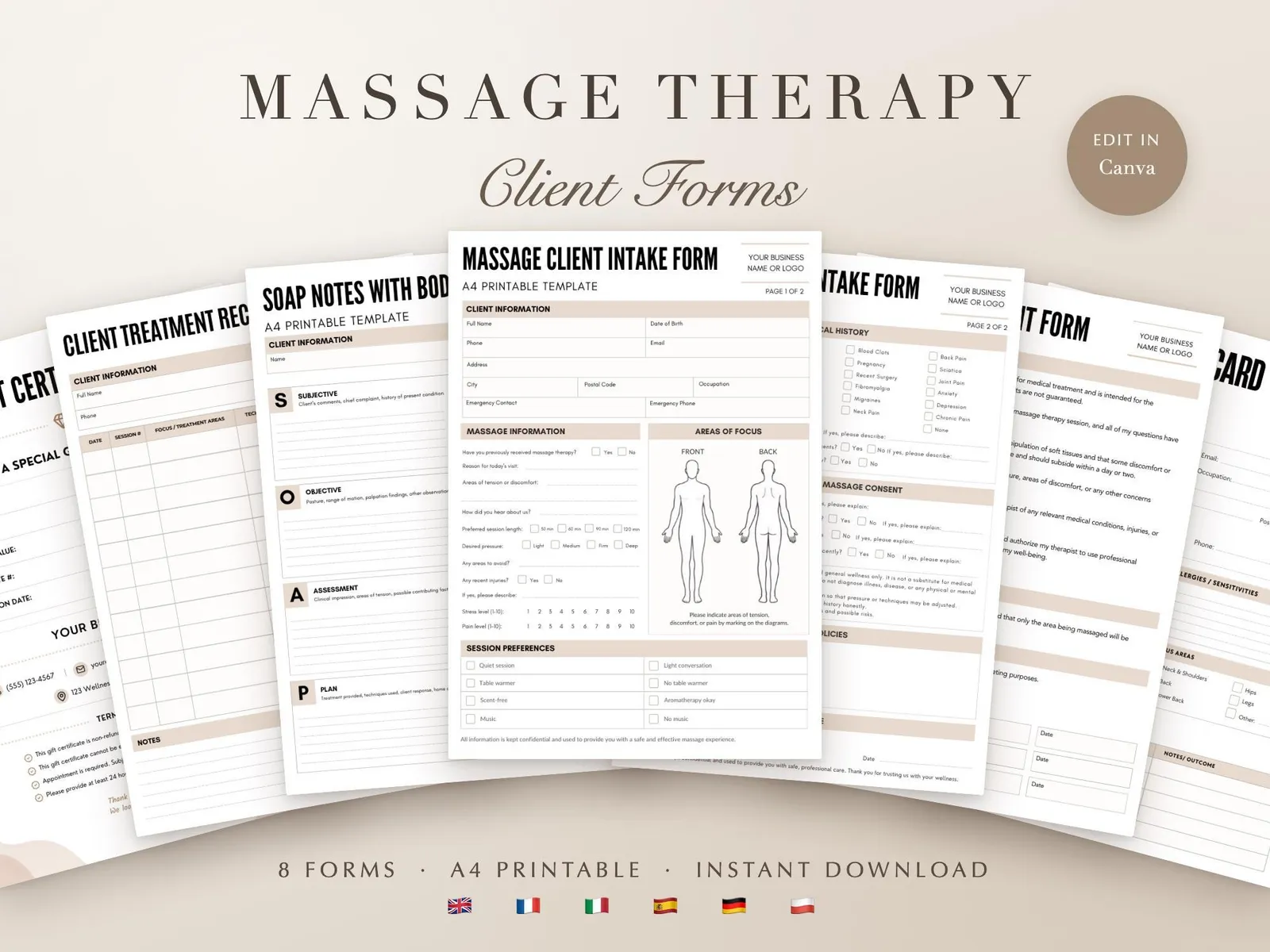
An intake form does three jobs at once: it tells you what you are working with, it records that the client agreed to the treatment, and it gives you something to read before the second appointment so you are not starting again. Most forms do the first and forget the other two.
What follows is the shape of a form, not clinical guidance. The conditions you are trained to work with, the ones you refer on, and the consent wording your insurer and your local rules require are yours to set — and they are worth checking once with your professional body rather than copying from a template you found online.
Before the treatment
- Name, date of birth, phone, email, and how they would like to be contacted about appointments.
- Who referred them or where they found you. One field, and it tells you more about your marketing over a year than any analytics screen.
- What brought them in today, in their own words. Leave the box big; people write more than you expect and the phrasing matters.
- How long it has been going on, and what makes it better or worse.
- Anything they are currently being treated for, and by whom.
- Medication they take regularly.
- Previous injuries, surgery, or treatments that went badly.
- Pregnancy, where relevant to the treatments you offer.
- Allergies, including to oils, waxes and latex.
Wording that gets an honest answer
A tick-box list of conditions gets skimmed and half-answered. A short question with room to write gets an answer. "Is there anything about your health I should know before we start?" collects more than three lines of checkboxes, because a client who is not sure whether something counts will write it down when there is space, and skip it when there is a box.
Add one line under the health section explaining why you are asking: "This is so I can adapt the treatment — nothing here stops you being treated." People withhold information they think will get them turned away.
Consent, in plain sentences
- What the treatment involves, including which areas will be worked on and what they will be asked to remove or move.
- That they can ask you to stop or change pressure at any point, without explaining why.
- That they consent to the treatment described, with a signature and a date.
- How their information is stored, how long you keep it, and who else ever sees it — which for most solo practices is nobody.
The part that pays for itself: the second visit
Leave space on the same record for treatment notes: what you did, what you found, what you suggested, and anything they mentioned in passing. Read it for thirty seconds before the next appointment and the client hears "how did the shoulder go after the driving?" — which is the moment a one-off booking becomes a regular one.
Whatever form you use, keep the records somewhere you can find one in under a minute and back them up. A paper file in a locked drawer is fine; a pile in a bag is not, and neither is a folder on a laptop with no copy anywhere else.
Sets from this guide
Skip the blank page
Written for
Your line of work
Keep reading