Bookstagram captions that get replies, not just likes
A pretty grid gets the follow; the caption gets the conversation. Here are the caption shapes that reliably start one on a book account, with the openings to use and the three habits that kill a comment section.
3 min read · free to read, no sign-up
Book accounts grow through conversation more than through reach. A shelf photo can stop a scroll, but it is the sentence under it that decides whether somebody types something back — and comments are what tell Instagram to keep showing the account to people who are not following it yet. So the caption is not the bit you write last in the lift; it is the half of the post that does the work.
Write the caption as a question you actually want answered
The instruction "ask a question" produces "what are you reading?" on ten thousand accounts a day, and it gets nothing, because it asks a stranger to write a whole answer with no help. Narrow it until answering takes four words. "Slow burn or instant spark?" is answerable in one. "Which one would you have dnf'd?" needs a name. Give people a choice, not a blank page.
- Two options, one tap: paperback or e-reader, series or standalone, morning or midnight reading.
- A confession that invites one back: "I skipped every chapter in the second point of view. Tell me I am not alone."
- A ranking with a gap: "my top three of the year — the fourth slot is open, convince me."
- A recommendation request with a constraint: "something to read on a four-hour train, nothing sad."
Open with the sentence you would say out loud
Instagram shows about two lines before "more". Spend them on the thing you actually thought about the book, not on setup. "I finished this at 2am and immediately texted three people" earns the tap; "Happy Monday, bookish friends! Today I want to share with you a book I recently read" spends the whole preview saying nothing.
- 1First line: the reaction, the number, or the confession.
- 2Middle: two to four short lines of what it is and who it is for. Bullet points are fine; nobody is marking your prose.
- 3Last line: the one-tap question. Not two questions — one.
Say who a book is for, not whether it is good
"Five stars, loved it" is unquotable and unsearchable. "For anyone who wants a slow-burn romance with no third-act break-up" is a recommendation someone can act on, and it is also the language people type into search — trope names, comparisons, reading situations. Reviews that name the reader travel further than reviews that name a rating.
Three habits that flatten a comment section
- Thirty hashtags in the caption. Put five to eight relevant ones at the end, or in the first comment, and spend the space you save on a sentence people can answer.
- Tagging the author on a lukewarm review. It changes who you are writing to, and the honesty goes out of the post.
- Never replying. Replying to every comment for the first hour is the single cheapest thing that grows a book account, and it is the one most people skip.
Keep a caption bank
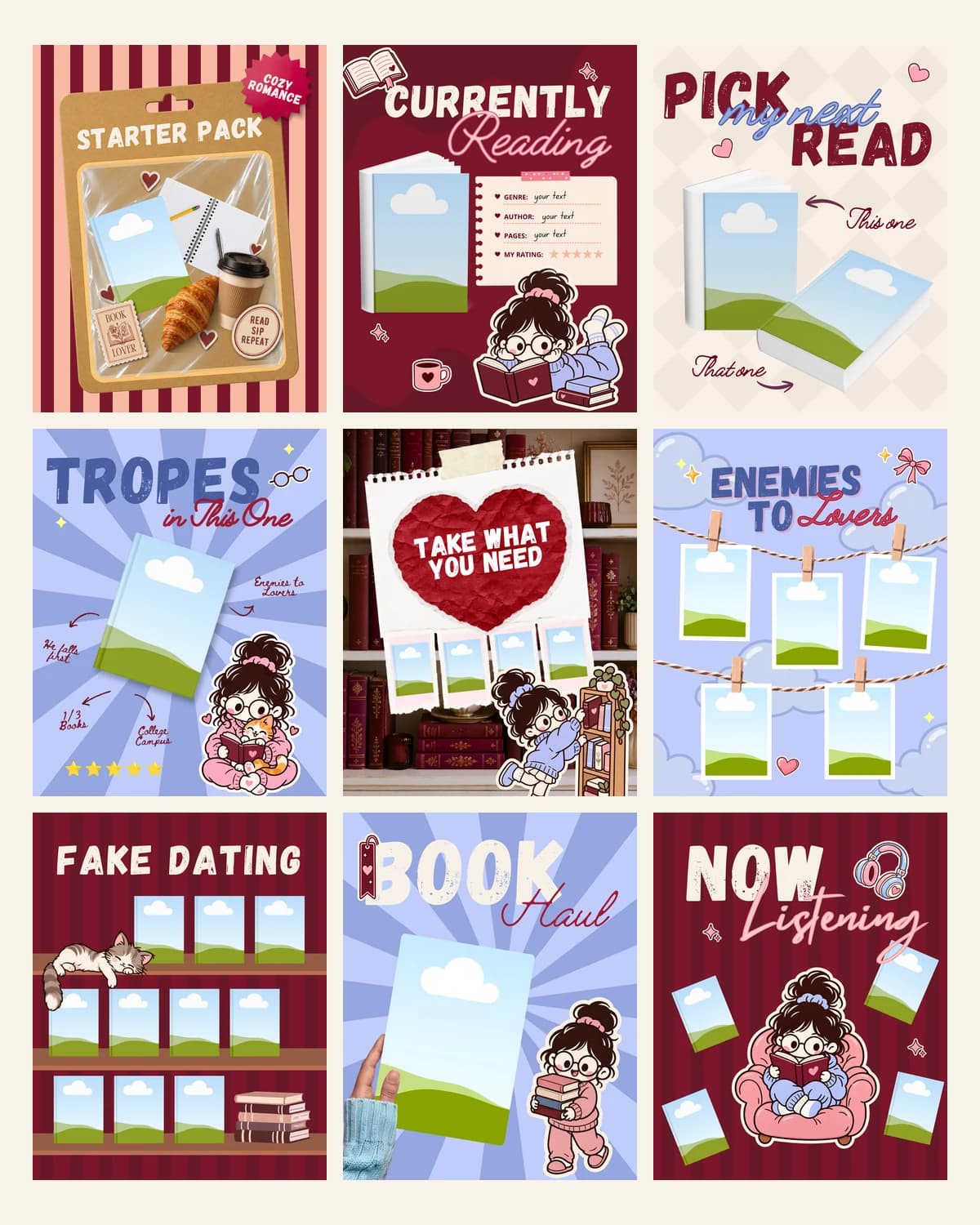
Write ten captions in one sitting, not one a day. The template sets on this site are built the same way — the layouts repeat on purpose, so a wrap-up, a TBR and a current-read post are the same three shapes every month. Pair a repeating layout with a repeating caption structure and posting stops being a decision. That, not a burst of inspiration, is what a feed running for a year looks like from the inside.
Sets from this guide
Skip the blank page
See every set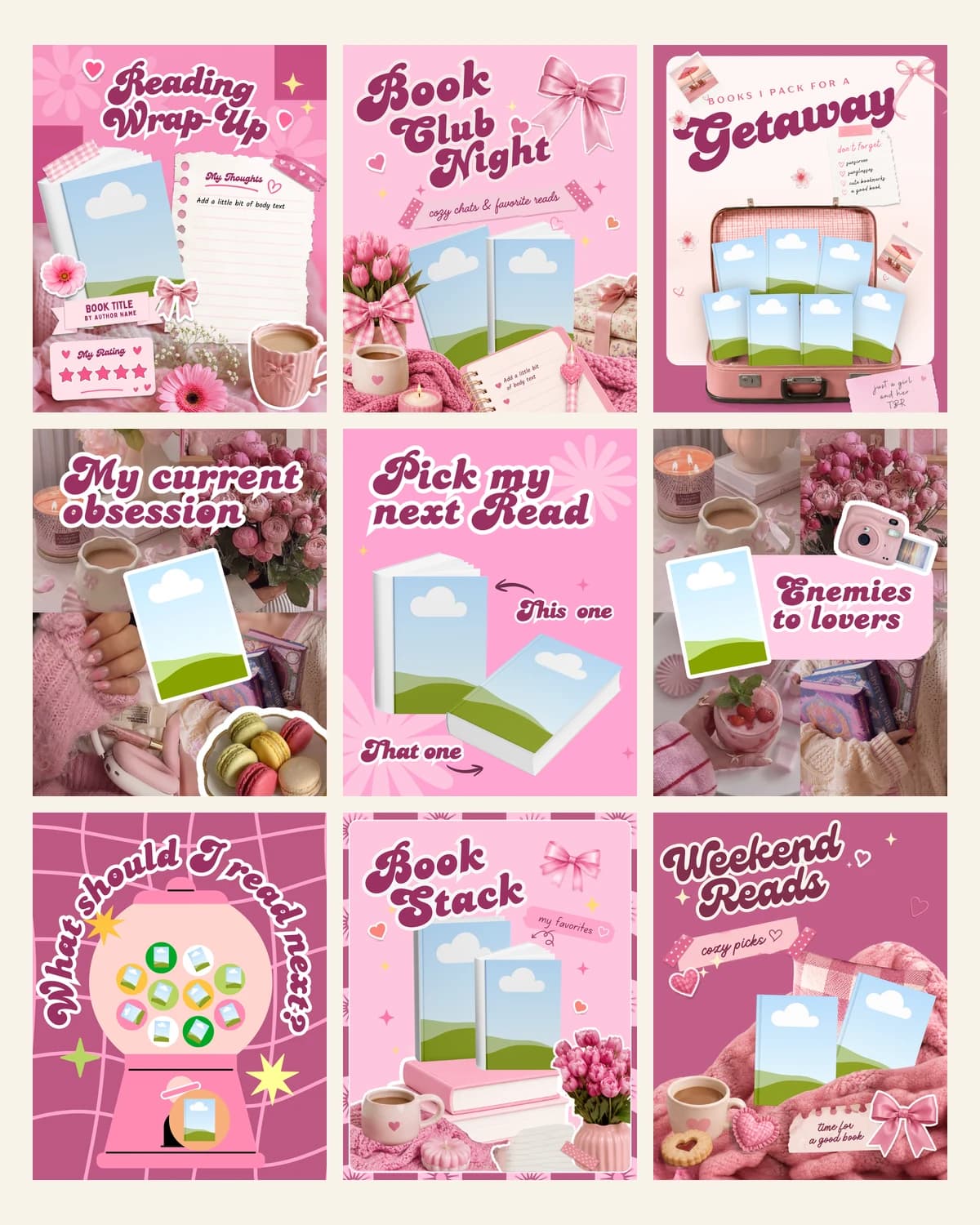
Written for
Your line of work
Keep reading