How often to water houseplants — and why the schedule changes in winter
Watering by the calendar kills more plants than forgetting does. What actually decides the interval, how it changes between summer and winter, and a way to track it that survives a holiday.
3 min read · free to read, no sign-up
The most common houseplant advice is a number: water once a week. It is the reason so many plants die in January, because the plant that drank a cup a week in July is barely growing in the dark and the same cup is now sitting in the pot rotting the roots.
What actually sets the interval
- The species. A snake plant and a calathea are not on the same schedule and never will be.
- The season. Growth slows when the light drops, so most plants want a longer gap between waterings from about November to February.
- The light the plant is actually in — not the room, the spot. A metre from the window is a different plant to one on the sill.
- The pot and the soil. Terracotta dries faster than plastic; a chunky aroid mix dries faster than shop compost.
- Your home. Central heating in a small flat dries a pot in half the time of a cool north-facing room.
The check that beats every schedule
Push a finger two knuckles into the soil. Damp at that depth: leave it. Dry: water thoroughly until it runs from the drainage hole, then empty the saucer. Lifting the pot works as well once you know what a dry one weighs.
A schedule is still worth keeping, though, for the same reason a bin day is: it stops the plant being forgotten entirely. Use the interval as a prompt to check, not as an instruction to pour.
Two intervals, not one
Write down two numbers for each plant: the summer interval and the winter one. For most tropicals the winter gap is one and a half to two times the summer gap. Swap between them when the clocks change rather than when the plant starts complaining, because by then the damage is done.
Overwatering does not look like you think
Yellow lower leaves, a limp plant in wet soil and a sour smell from the pot are drowning, not thirst — and the instinct to water a drooping plant is what finishes it. A thirsty plant is light in the hand and its soil has pulled away from the side of the pot.
Track the date, not the feeling
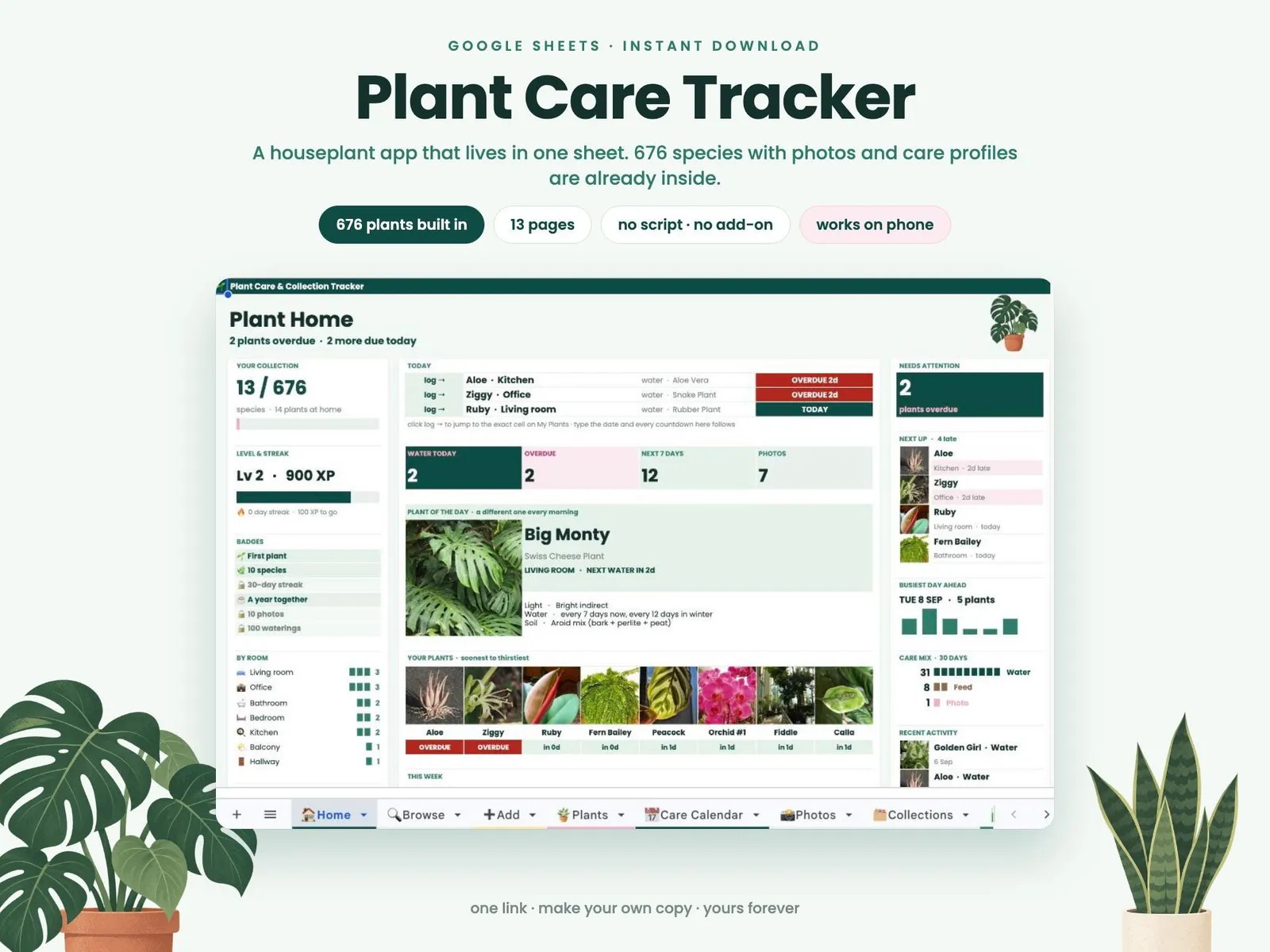
One column with the date you last watered turns all of this into arithmetic: days since, days left, and a list of what is due today. Add the feeding date and the repotting month and the whole collection stops living in your memory — which matters most for the plant you keep in the bedroom and only see at night.
Sets from this guide
Skip the blank page


Keep reading