What to track in a reading journal — and what to stop tracking
Ratings and page counts are the easiest things to record and the least useful to read back. Here is what a reading log tells you a year later, and how to keep one that survives February.
3 min read · free to read, no sign-up
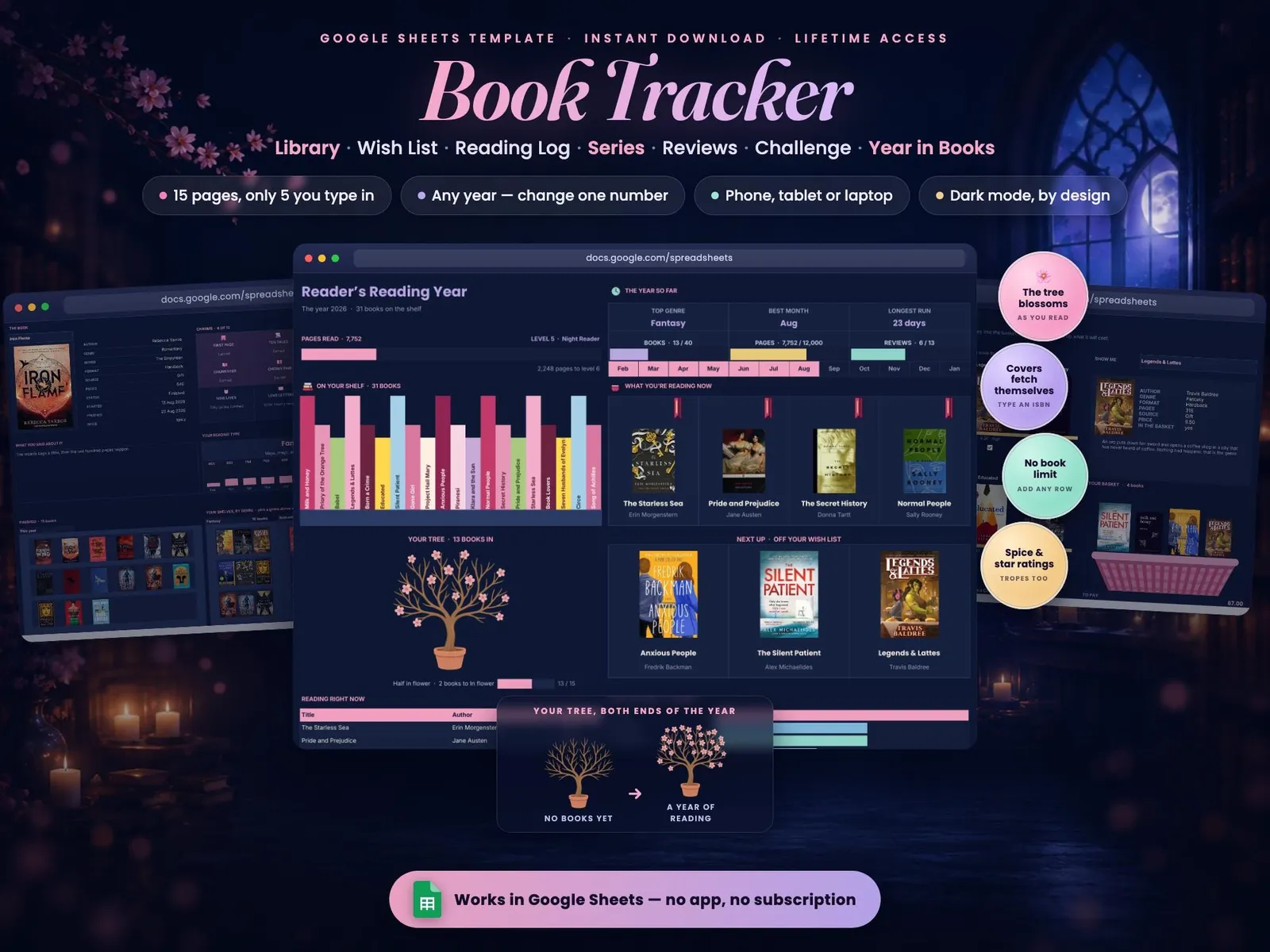
Most reading journals die in February, and always for the same reason: they were built to be filled in rather than read. Twelve fields per book is a chore by the fourth one. The question worth asking before adding any column is what it will tell you in a year.
The five that earn their place
- 1Title and author. Obviously — but record the author properly, because the most useful pattern in any reading log is which authors you finish.
- 2Started and finished dates. Together they show the books that took three months, which is the honest signal about what you enjoy, and the only one a star rating hides.
- 3How it came to you: recommendation, shop, library, a list, a friend's name. After a year this tells you where your good books actually come from, and it is almost never the source you assume.
- 4One line about it, written the day you finished. Not a review — the thing you would say if somebody asked. In a year that line is worth more than the rating.
- 5Did you finish it, and if not, where you stopped. A record of abandoned books is the most useful page in any journal, and the one almost everybody leaves out.
What to stop tracking
- Page counts, unless you are chasing a target you actually care about. They turn a long book into a bad decision.
- Star ratings on their own. Three months later you cannot remember what four meant, and it flattens two very different books into the same number.
- Mood, weather and format columns, unless you know what you would do differently on reading them back.
- Anything that requires the book in your hand to fill in. The log is written after, from memory, or it is not written.
The pages worth having beyond the list
Three, and they are the ones people add in year two: a to-read list with where each came from, so a recommendation does not evaporate; a page of quotes, which is the only part of a reading journal anybody ever re-reads for pleasure; and a page of books you own and have not read, which is startling once and then changes what you buy.
Keeping it alive past February
Fill it in at the end of a book, not during. Give yourself permission to write one line. And keep it where you read — the journal that lives in a drawer in another room is the journal that stops.
If you post about books, the same log doubles as your content: the abandoned column is a post, the recommendation-source column is a post, and the one-line notes are captions you already wrote at the moment you had something to say.
Sets from this guide
Skip the blank page
See every set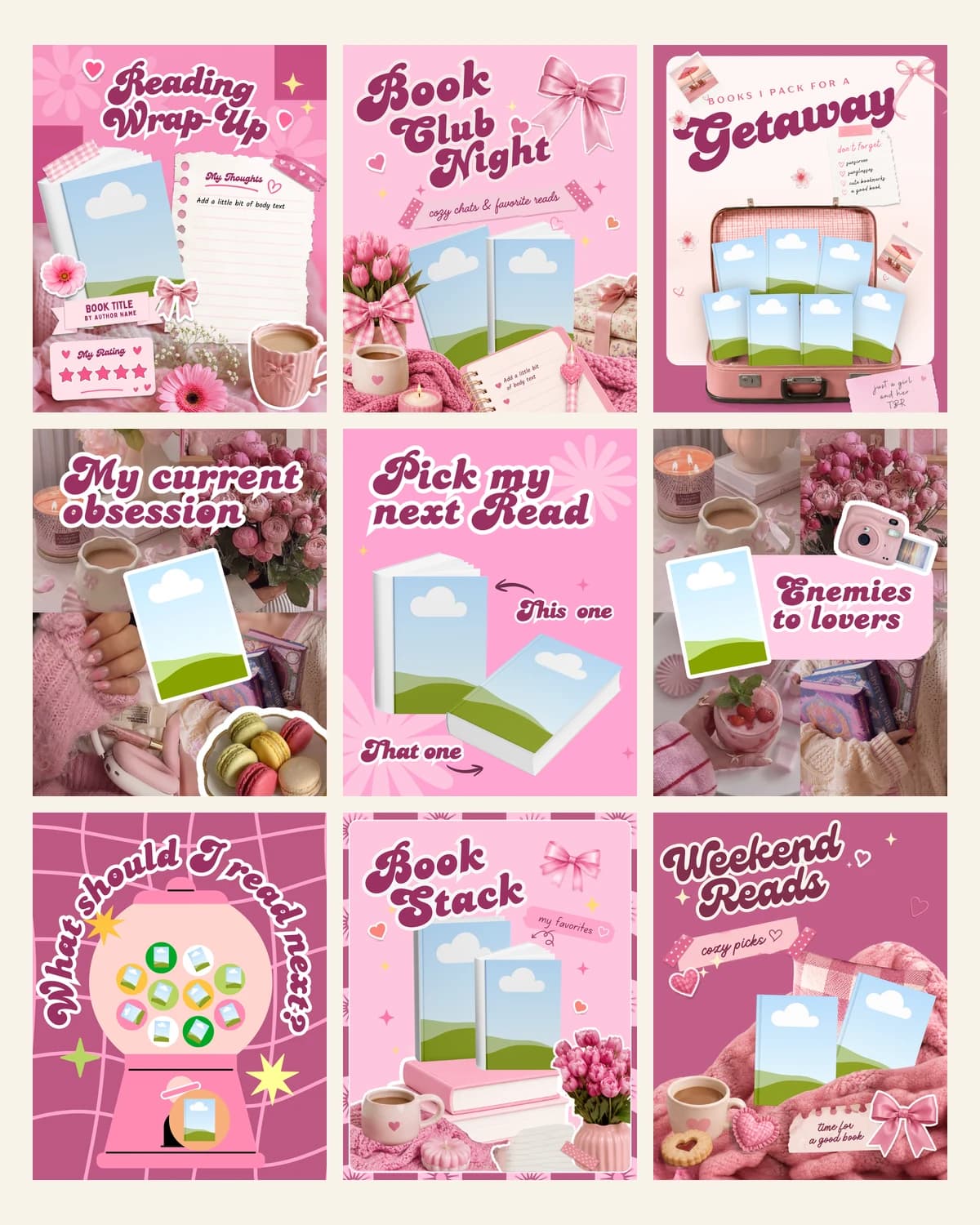

Written for
Your line of work
Keep reading