How to grow a bookstagram that people actually talk in
Cover photos alone do not grow a reading account. What does: a repeatable weekly shape, opinions with a reason attached, and disclosure that keeps you on the right side of the rules.
4 min readUpdated · free to read, no sign-up
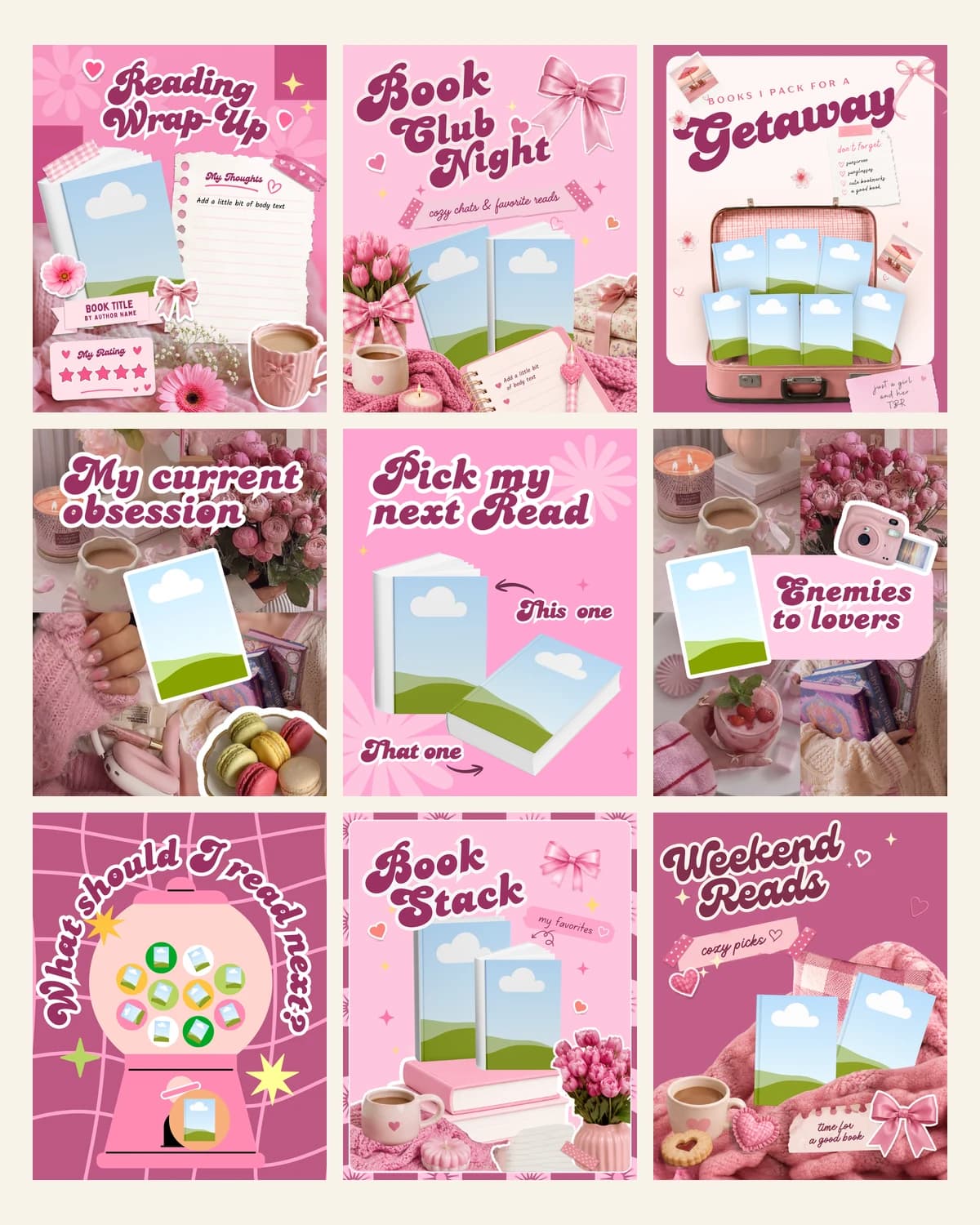
A bookstagram grows on conversation, not on photography. The accounts that stall are usually the prettiest ones: a shelf, a candle, a cover, no opinion. The accounts that grow give readers something to disagree with and somewhere to say it.
A weekly shape beats a posting schedule
- 1Currently reading, with the specific thing you are enjoying or not — page count and pace, not just the cover.
- 2A recommendation tied to a mood or a situation rather than a genre: what to read after a heavy one, what survives a commute.
- 3A question that costs a reader nothing to answer — the last book you abandoned, the one everyone loves that you did not.
- 4A wrap-up or a tracker at the end of the month, which is the post that gets saved.
Four repeating slots are easier to sustain than daily invention, and returning followers learn the rhythm.
Photograph books so the covers survive the grid
- Daylight near a window, no direct sun — glossy covers turn into mirrors.
- Shoot straight down or straight on. Angles make the type on a spine unreadable at thumbnail size.
- Keep the background plain and repeat it. A recognisable surface makes a grid look like a publication.
- One book in focus per post, even in a stack. Five spines with nothing highlighted gives the eye nowhere to land.
Reviews and ARCs without the trouble
If a publisher sent the book, say so in the post itself — not only in a story, and not buried under thirty hashtags. Gifted copies and affiliate links are advertising in most jurisdictions, and the disclosure has to be visible before someone taps more.
Criticism is fine and it is what builds a voice; tagging an author into a negative review is not. Say what did not work and why, and let the review live on your page.
Where the growth actually comes from
Comments on accounts your size, not on the biggest ones. Read-alongs and book club nights, because they give people a reason to come back on a specific day. And a saveable post at least once a month — a tracker, a TBR list, a recommendation set — since saves are what push a reading post past the people who already follow you.
Captions that start a conversation
Bookstagram runs on talking, and most captions make talking impossible by finishing the thought. A five-star review with a neat summary and a closing line about how everyone should read it leaves nobody anything to say except agreed.
Leave a gap on purpose. Say what the book did to you rather than what it was about, name the thing you are unsure about, and ask something answerable in four words. "Did the ending work for you" gets replies. "What are you reading" gets a list nobody responds to.
- Disagreeing politely with a popular book gets more genuine conversation than praising it, and it is what makes an account worth following rather than worth scrolling.
- Reply to every comment for the first year. It is the least glamorous growth advice there is and the only one that reliably works.
- Ask about the reader's experience, not their opinion of you. Nobody knows how to answer "what do you think of my shelf".
Readalongs and collaborations
The fastest honest growth on bookstagram is borrowing someone else's audience with their consent, and the smallest version of that is a readalong: two or three accounts of similar size read the same book over a fortnight and post to a shared tag.
Approach people roughly your own size — accounts far larger get twenty of these a week and ignore them all. Say what you are proposing in three lines: the book, the dates, the tag, and what you will each post. Vague enthusiasm gets no reply; a plan usually does.
Collaborative posts, where both accounts appear as authors, put the post in both sets of followers' feeds at once. Used once a month with someone whose taste genuinely overlaps yours, that is worth more than any amount of hashtag research — and unlike a giveaway, the followers it brings actually read.
Still wondering
Questions
How do you start a bookstagram from zero?
Pick a lane narrow enough to be recognisable — a genre, a format, a reading habit — and post to it weekly. Accounts that post everything are indistinguishable from every other account that posts everything.
How often should a bookstagram post?
Three or four times a week, with the same shapes recurring: a current read, a recommendation, a wrap-up. A predictable rhythm is what turns a follower into someone who comes looking.
Do you need a good camera for bookstagram?
No. A phone by a window beats a camera in bad light. What matters is that the cover survives the grid thumbnail, which is a framing problem, not a hardware one.
How do bookstagrammers get ARCs from publishers?
By having a consistent record of reviewing books in a defined genre and being easy to contact. NetGalley and publisher request forms come after that record exists, not before.
Do hashtags still grow a bookstagram?
Barely on their own. Growth now comes from saves and shares, so a post that gets added to someone's reading list travels further than one tagged thirty ways.
Sets from this guide
Skip the blank page
See every set
Written for
Your line of work
Keep reading