Instagram for pet brands: what to post when cute is not enough
Pet accounts collect followers easily and convert them badly. Here is the post mix that sells product, how to use customer photos properly, and why the seasonal peaks decide most of the year's revenue.
4 min read · free to read, no sign-up
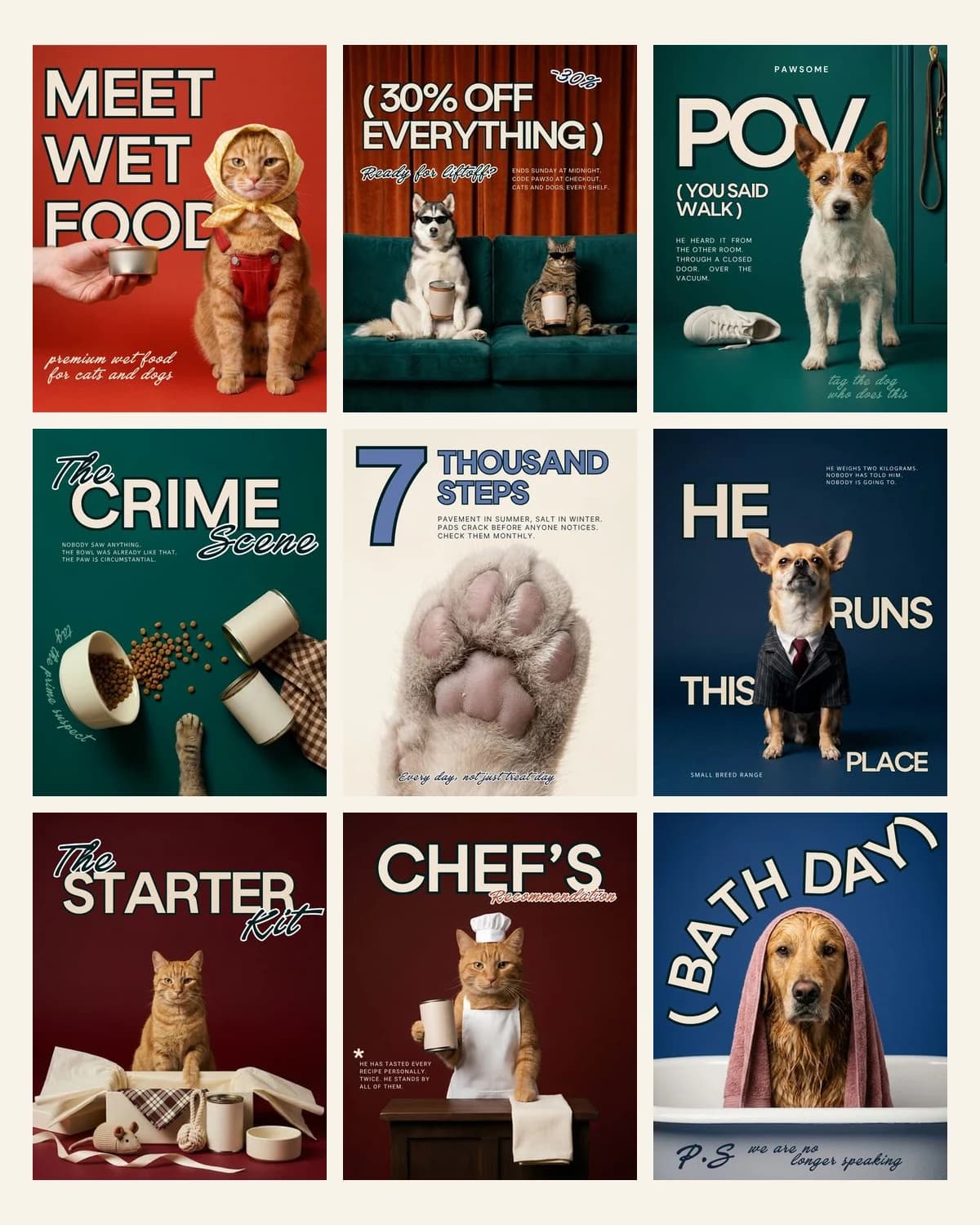
Pet is the easiest category on Instagram to grow and one of the hardest to sell in. A dog photograph will always outperform a product photograph, so accounts drift towards the content that performs, build an audience that came for the dog, and then wonder why a launch post lands in silence.
Four kinds of post, and none of them alone
A pet brand account needs four things in rotation. Run only the first and you are an entertainment account; run only the last and you are an advert nobody follows.
- 1Humour and personality. This is what earns the reach, and it is the cheapest content you have — customers send you most of it for free.
- 2Education. What to look for in a harness, how much a dog that size actually needs, why the thing you sell is made the way it is. This is what makes you credible rather than merely likeable.
- 3Product. Shown in use, on a real animal, in a real room. Studio-only product photography reads as a catalogue and gets scrolled past.
- 4Proof. Customer photos, reviews, and the reorder rate. In pet, other owners are the only endorsement that carries weight.
Customer photos are the whole asset
Nothing you can shoot will beat a photograph an owner took of their own animal using your product, because it is proof and it is emotional at the same time. The brands that do well are the ones that make sending it in effortless and then actually use what arrives.
- Ask in the parcel, not only on the account. A card in the box asking for a photo converts far better than a caption.
- Always credit, always ask before reposting to the grid, and keep a note of who said yes. A brand that reposts without asking loses the customer it was trying to flatter.
- Reply to every one, even the ones you do not post. The person who sent a photo is a returning customer being made or lost in that reply.
Collaborations beat paid pet influencers
Large pet accounts charge like media companies and convert like billboards. Smaller ones — a few thousand followers, a specific breed or a specific problem — convert far better and will usually work in exchange for product, because they are enthusiasts rather than agencies.
Approach them with a plan rather than with enthusiasm: what you are sending, what you are asking for, by when, and whether they can keep it. Ask for one honest post and one story, not a campaign. And pick accounts whose followers own the same kind of animal as your product suits — a giant-breed account is worth nothing to a brand that fits cats.
The year is decided by four weeks of it
Pet retail is seasonal in a way that surprises people who have not sold in it. Christmas, the weeks after it, spring shedding and the first hot week of summer carry a disproportionate share of the year — and every one of them needs content built weeks earlier, when nobody feels like thinking about it.
Build the Christmas posts in October and the summer heat posts in April. A brand posting about cooling mats on the third hot day is a week behind the search, and in pet a week is the whole peak.
Captions that sell without pleading
The most common pet-brand caption is a pun followed by a shop-now. It performs badly because it asks for a purchase without having earned one, and because the pun was the only content in the post.
Lead with the animal's problem, not the product's feature. Nobody wants a harness; they want a dog that stops pulling and a walk they do not dread. Name that, then say what the thing does about it, then say where to get it. One sentence each is plenty.
Still wondering
Questions
Why do pet accounts get followers but not sales?
Because the content that grows fastest — animals being funny — attracts people who came for the animal. Without education, product-in-use and proof posts in the rotation, there is nothing connecting the audience to the thing you sell.
Can I repost a customer's photo of their pet?
Ask first, credit always, and keep a record of who agreed. Reposting without asking loses the customer you were trying to flatter, and it is the most common complaint pet brands generate.
Are pet influencers worth paying?
Large ones rarely. Accounts of a few thousand followers around a specific breed or problem convert far better, usually work for product, and cost a parcel instead of an invoice.
When should a pet brand post seasonal content?
Weeks before the season. Christmas content is built in October, hot-weather content in April. Posting about cooling mats on the third hot day means the peak has already been searched and bought.
What makes a pet product caption work?
Leading with the animal's problem rather than the product's feature. Nobody wants a harness; they want a walk they do not dread. Name that first, then the product, then where to buy.
Sets from this guide
Skip the blank page
See every set
Written for
Your line of work
Keep reading