How to write a yoga class description that fills the class
What a beginner is actually trying to find out, the four lines that answer it, and the words that quietly tell the wrong person the class is not for them.
2 min read · free to read, no sign-up
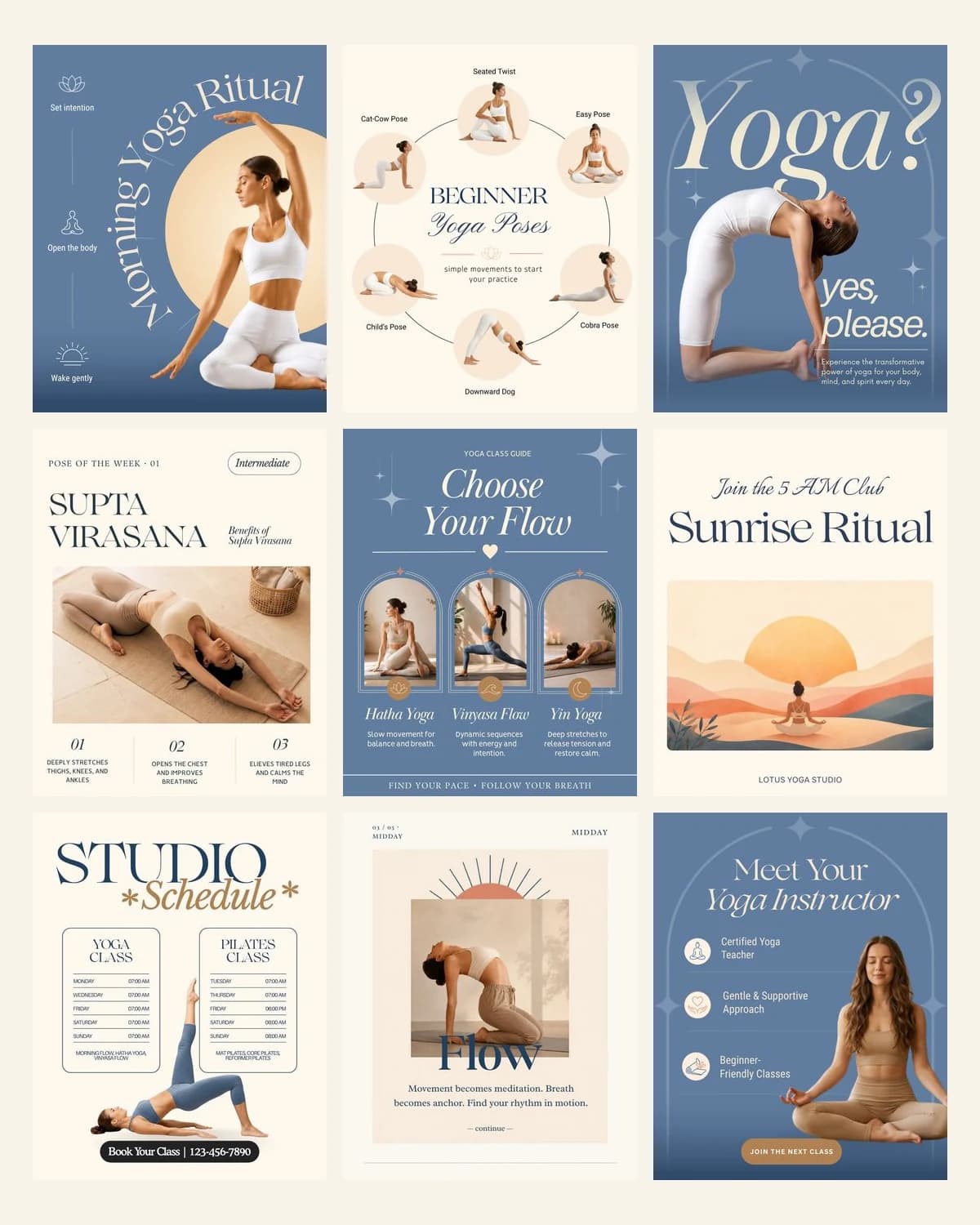
Somebody reading a class description is not choosing between styles. They are working out one thing: will I embarrass myself. Every class that fills answers that before it describes anything else.
The four lines
- 1Who it is for, plainly. "For people who have never done yoga" or "for regular practitioners who want a strong hour". Say the level in words, not in Sanskrit.
- 2What happens in the hour: how it starts, roughly what you do, how it ends. A stranger should be able to picture the room.
- 3How it will feel afterwards — the actual reason people come back.
- 4What to bring and what to expect on arrival: mat or not, what to wear, how early, whether anyone will look at them.
That last line does more for a beginner than anything about the style. Not knowing where to put their shoes is a bigger barrier than not knowing what vinyasa means.
Words that filter, in both directions
- "All levels" tells nobody anything and reassures no one. Name the level.
- Sanskrit names with no translation read as a members' club to the person who has never been.
- "Challenging" and "strong" are useful — they bring the right people and keep the wrong ones away.
- "Gentle" is not the same as "beginner", and mixing them up is why some beginners leave bored and others leave sore.
- Say if it is hot, dark, loud, or hands-on. Everybody has a preference and being surprised is what stops the rebooking.
Adjustments and consent, in one line
"I offer hands-on adjustments — there's a card on every mat if you'd rather I didn't." One sentence in the description settles a genuine worry for a lot of people, and it costs nothing to say.
The same words everywhere
Whatever wording works, use it on the timetable, the booking page, the Instagram caption and the poster. A class described three different ways reads as three different classes, and the person deciding gives up rather than working out which one is true.
Sets from this guide
Skip the blank page
See every set

Written for
Your line of work
Keep reading