How to price handmade products without working for nothing
Most handmade pricing forgets the hours. Here is the arithmetic that includes them, why doubling your materials cost is not a formula, and what to do when the honest price feels too high.
3 min read · free to read, no sign-up
Ask ten makers how they priced a piece and nine will describe the same method: add up the materials, double it, then knock a bit off because it felt like a lot. It produces a number quickly and it is the reason a stall that sold out all weekend still lost money.
The missing figure is always the same one. Not the resin, not the postage — the hours. They are invisible because you were going to be in the workshop anyway, and because counting them makes the price uncomfortable.
The four numbers a price has to cover
- 1Materials, at what you actually paid, including the wastage. A metre of fabric that yields three bags is not a third of a metre per bag if the offcut goes in the bin.
- 2Your time, at an hourly rate you decide before you start, not after. Include packing, the trip to the post office and the twenty minutes answering a question about sizing.
- 3Overheads: the stall fee, the studio corner, the shipping supplies, the listing fees, the card processing. Split them across a month of orders rather than pretending they are free.
- 4Profit, on top of the three above. Your wage is not your profit — profit is what lets the business buy a better machine without borrowing from you.
Add the first three, add a margin on top, and that is the wholesale price. Retail is usually twice wholesale, because retail is where the returns, the discounts and the unsold stock come out of.
Why the doubling rule keeps failing
Doubling materials works only when materials dominate the cost. For most handmade work they do not: a £4 pot of clay becomes a mug that took ninety minutes, and doubling the clay pays you £4 for the ninety minutes. The rule was borrowed from retail buying, where the shop's cost is the whole product, and it does not survive the trip to a workshop.
Count your hours for one month before you change anything
Write the start and finish time on every order for four weeks. Do not estimate — estimates are always the version of the job where nothing went wrong. At the end of the month you will usually find two things: one product line takes twice as long as it feels, and the piece you enjoy making least is the only one paying properly.
That is the point at which pricing stops being a feeling. You know the hours, you know the materials, and the number comes out of the arithmetic rather than out of what the stall next door is charging.
When the honest price is higher than the market
- Make the piece faster, not cheaper: batch the cutting, keep one glaze, stop offering fourteen colours.
- Move up rather than down. A £45 piece with better photography sells to a different buyer than a £22 one, and that buyer haggles less.
- Drop the line. A product that cannot be made at a profit at any believable price is a hobby, and it is allowed to be — as long as it is not filling the hours the business needs.
- Sell the time directly: commissions, workshops and repairs price by the hour honestly, and nobody blinks.
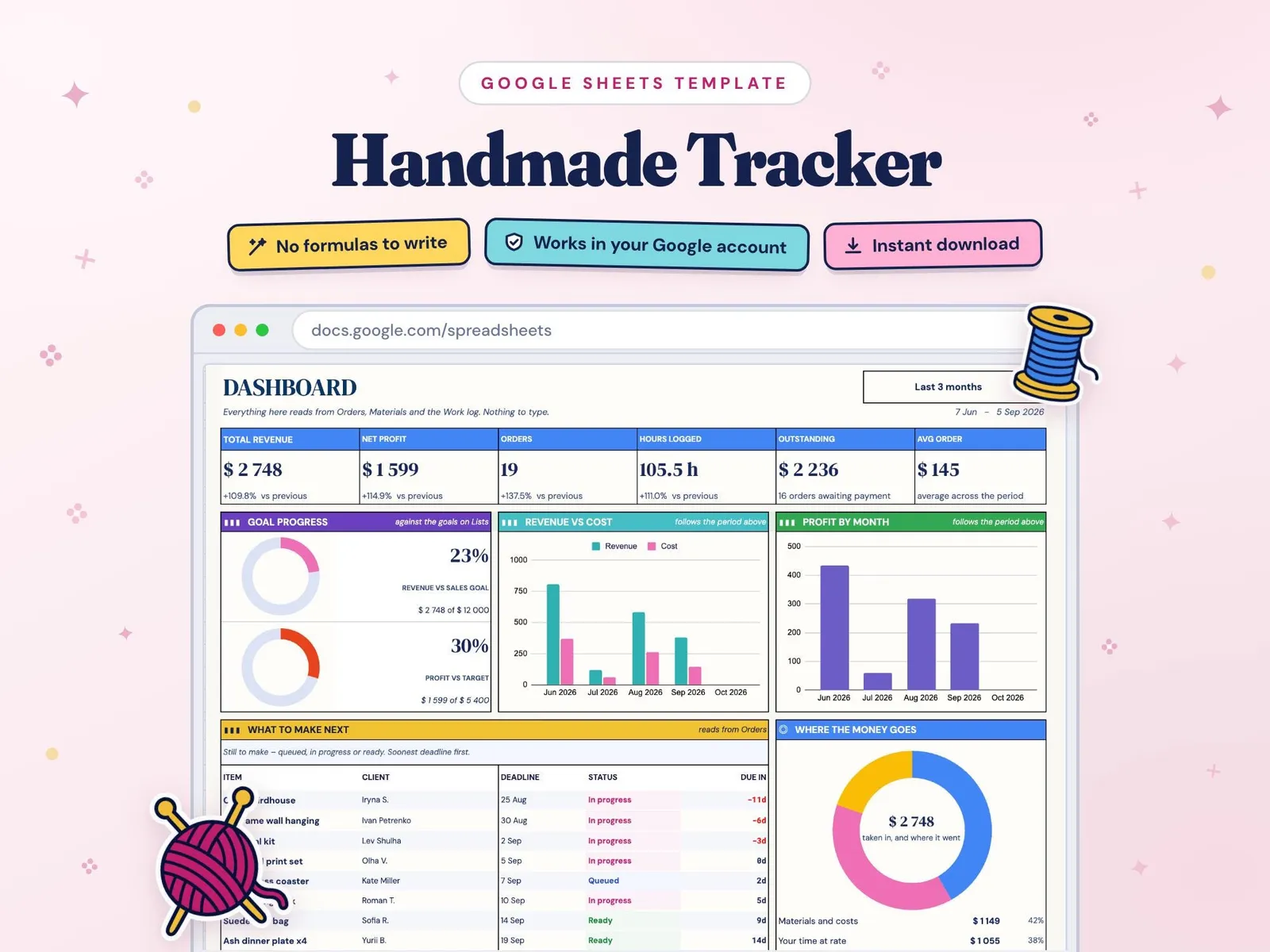
None of this requires software. It requires the hours to exist somewhere you can see them, next to the materials and the fees, so the profit on an order is a number rather than a hope. A sheet does that as well as anything.
Sets from this guide
Skip the blank page

Written for
Your line of work
Keep reading