How to find every subscription you are paying for
The average card is carrying two or three forgotten renewals. How to find them in an afternoon, what to do about the annual ones that hide for eleven months, and how to keep the list true.
2 min read · free to read, no sign-up
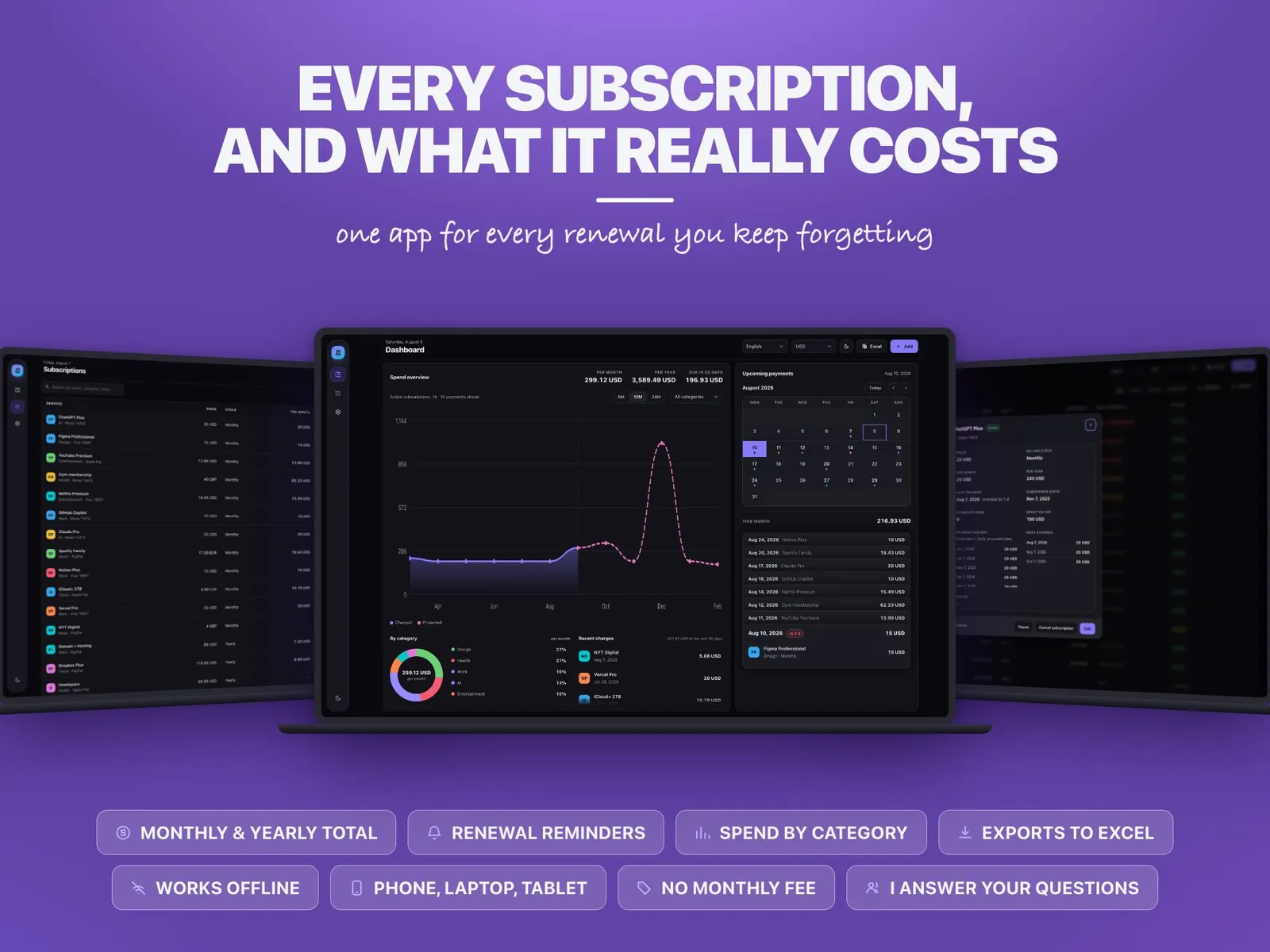
Nobody signs up for a subscription they do not want. They sign up for a trial, forget the date, and the charge arrives every month afterwards in an amount small enough not to notice on a statement.
The afternoon that finds them
- 1Open three months of card statements — not one. Monthly charges show up in one, quarterly and annual ones do not.
- 2Search your email for "receipt", "invoice", "your subscription" and "renews". The inbox remembers what the statement abbreviates.
- 3Check the app stores directly: Apple and Google both list active subscriptions in one screen, and they are the ones people forget they signed up through.
- 4Write every one down with its real amount, its cycle and its next renewal date.
Put the annual ones on the same footing
A £96 annual licence is £8 a month, and it should sit next to the £8 monthly one when you decide what to keep. Convert everything to a monthly figure or the yearly charges stay invisible until the day they land, which is the day they are hardest to cancel.
Cancel in the right order
- Anything you have not opened in three months. If you are wrong you can resubscribe, usually at a new-customer price.
- Duplicates: two cloud drives, two music services, two password managers.
- The upgrade you took for one job that finished. The free tier is often enough now.
- Whatever renews next week. A renewal you cancel today is a month of use you have already paid for, not a loss.
Keeping the list true
The list is only useful if it survives the month you made it. Two habits keep it alive: add the subscription the day you sign up, and record the renewal date rather than the sign-up date, because the renewal is the only date that ever costs you anything.
A tracker that warns you before a renewal turns the whole thing from an audit into a decision you make once a year, on purpose. That is the difference between a spreadsheet you filled in and one that pays for itself.
Sets from this guide
Skip the blank page
Written for
Your line of work
Keep reading