What to put in an Airbnb welcome book (and what guests never read)
Guests open a welcome book twice: in the first five minutes and at eleven at night when something has gone wrong. Here is what belongs on those two pages, what to cut, and the wording that stops the same three messages arriving every stay.
3 min read · free to read, no sign-up
A welcome book is not a brochure. Guests read it under pressure — standing in a hallway with luggage, or sitting on the edge of a bed at eleven at night because the heating is doing something odd. Everything in it should survive being read in that state, which rules out long paragraphs, a page of your renovation story, and anything arranged by theme rather than by urgency.
The test for every page is simple: does this stop a message arriving? A welcome book earns its place by turning the questions you answer every stay into something the guest can answer themselves.
The first page, in the first five minutes
- 1The wifi name and password, in large type, exactly as they are typed — case included. This is the single most-photographed page in any welcome book, so put nothing else on it.
- 2How to work the heating or air conditioning, in the order the buttons are pressed. Not the manual: the three steps that get it to twenty degrees.
- 3Check-out time and what you want done before it. Guests want to leave you happy and mostly do not know how.
- 4Your name and how to reach you, with a plain sentence about when you answer — "messages here, usually within an hour, and any time at night if something is wrong".
- 5Bins: which one, which day, where they live. Waste is the most common source of a bad neighbour and a bad review at the same time.
The page that saves the night
The second page is the one nobody thinks about until it is needed: the stopcock, the fuse box, the boiler reset button, the number for the emergency plumber you already trust. A guest who finds that page fixes a tripped switch in ninety seconds. A guest who does not sends you a message at midnight, and the review mentions it either way.
What to leave out
- The history of the building. Nobody has ever read it. If you love it, one short paragraph at the back.
- A list of forty restaurants. Six that you would go to yourself, each with one line saying why, beats a directory the guest could have found without you.
- Rules written as warnings. "No parties, no smoking, no exceptions" reads as suspicion at the moment a guest is at their most goodwilled.
- Anything that changes often — a menu, a price, an opening time. Put the name and let them look it up.
House rules people actually follow
Rules are followed when they come with a reason and a consequence that is not a threat. "Please keep the balcony door shut after ten — the neighbour's bedroom faces it" gets obeyed. "Quiet hours are strictly enforced" gets ignored, because nothing about it explains who is affected.
Put the rules after the useful pages, not before them. A book that opens with what a guest may not do reads as a warning notice; one that opens with the wifi reads as help.
Where the book should live
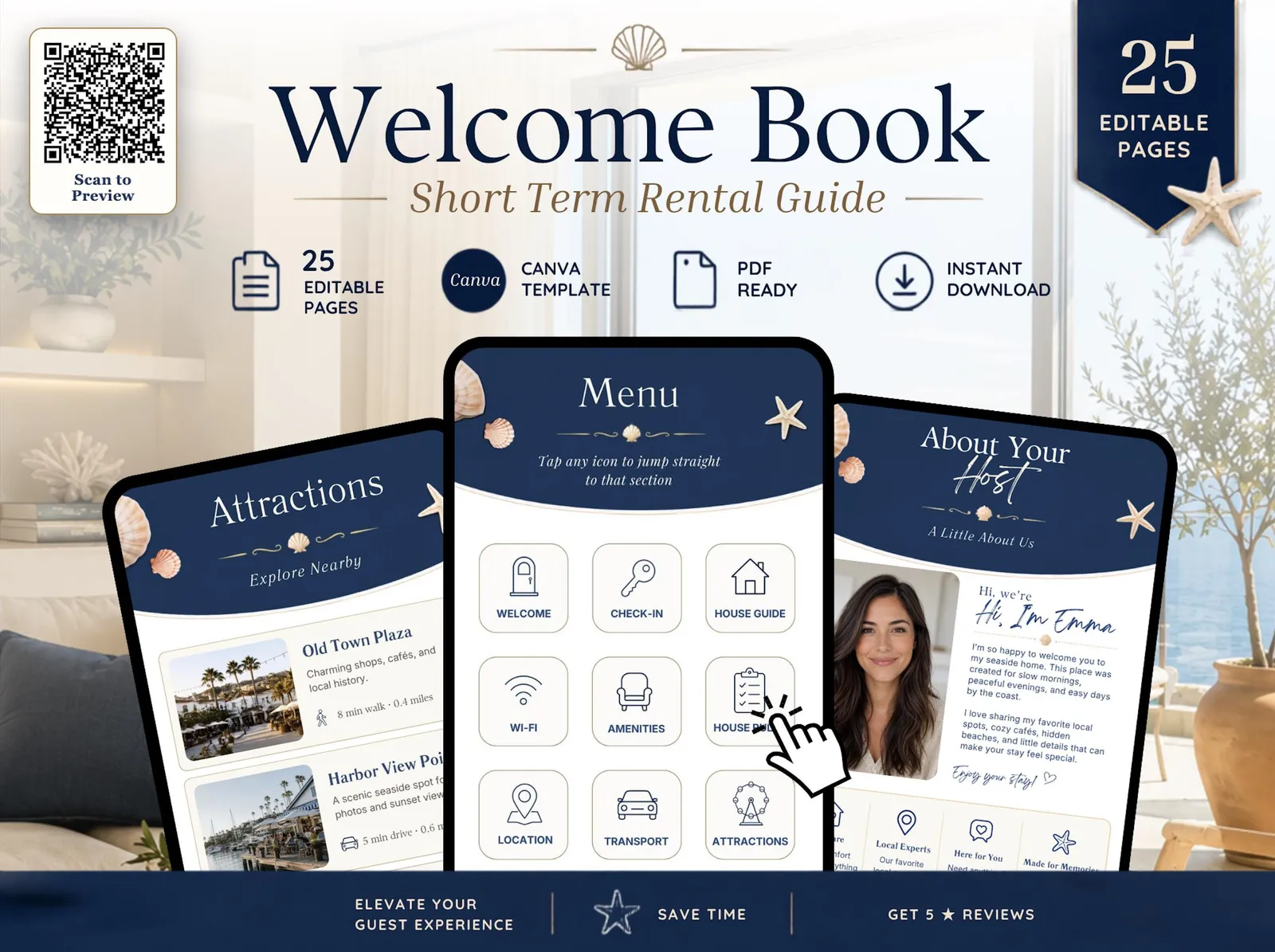
Printed and on the kitchen table, plus a digital copy in the check-in message. The printed one is the one that gets used, because the moment it is needed is the moment the phone is on charge in another room. Print it once, laminate the wifi page, and expect to reprint after a change of anything on the first two pages.
One editable file covers both: you change the wifi password in one place, and the printed copy and the sent copy stay the same document rather than drifting apart over a season.
Sets from this guide
Skip the blank page

Written for
Your line of work
Keep reading