What to track for a rental property, and when
The records a landlord needs through the year, the ones that only matter at tax time, and the habit that turns a shoebox of receipts into a set of numbers you can actually use.
3 min read · free to read, no sign-up
Rental accounting goes wrong in the same way every year: nothing is recorded for eleven months, and then a weekend disappears into a folder of receipts trying to remember whether the boiler service was March or April. The fix is not a better weekend. It is recording four things as they happen.
What counts as a deductible expense, how repairs are treated against improvements, and what has to be declared where all depend on the country you let in — so treat the categories below as the shape of a record, and confirm the treatment with your own accountant or tax authority.
The four things, as they happen
- 1Rent received: the date it arrived, the amount, and which tenancy it belongs to. Not the amount due — the amount that landed.
- 2Money spent: date, amount, supplier, and one line saying what it was for. "Plumber, kitchen tap replaced" is worth ten times "maintenance".
- 3The receipt itself, photographed the day it exists. A photo in a folder named by property survives what a paper receipt in a car does not.
- 4Dates that matter: tenancy start and end, deposit protected, inspection done, certificate issued and expiring.
The categories worth separating
- Mortgage interest and any lender fees, kept apart from capital repayment.
- Insurance — building, landlord liability, and anything you carry for contents.
- Repairs and maintenance, kept separate from improvements: putting a broken thing back is treated differently from making it better almost everywhere.
- Agent and letting fees, including the finding fee that only appears between tenancies.
- Ground rent, service charges and anything the freeholder bills.
- Certificates and compliance: gas, electrical, energy performance, alarms.
- Utilities and council tax for any period the property stood empty.
- Travel to the property, if it is claimable where you are — recorded at the time, because it is unreconstructable later.
The two dates that cost money when missed
Safety certificates and deposit protection deadlines are the two places where a good landlord with a full folder still gets caught, because both are silent until they are late, and in several countries a missed deposit deadline costs a multiple of the deposit itself. Put both on a calendar with a reminder a month ahead, and write the expiry date next to the certificate in your records rather than the date it was issued.
What the year-end looks like when this is done
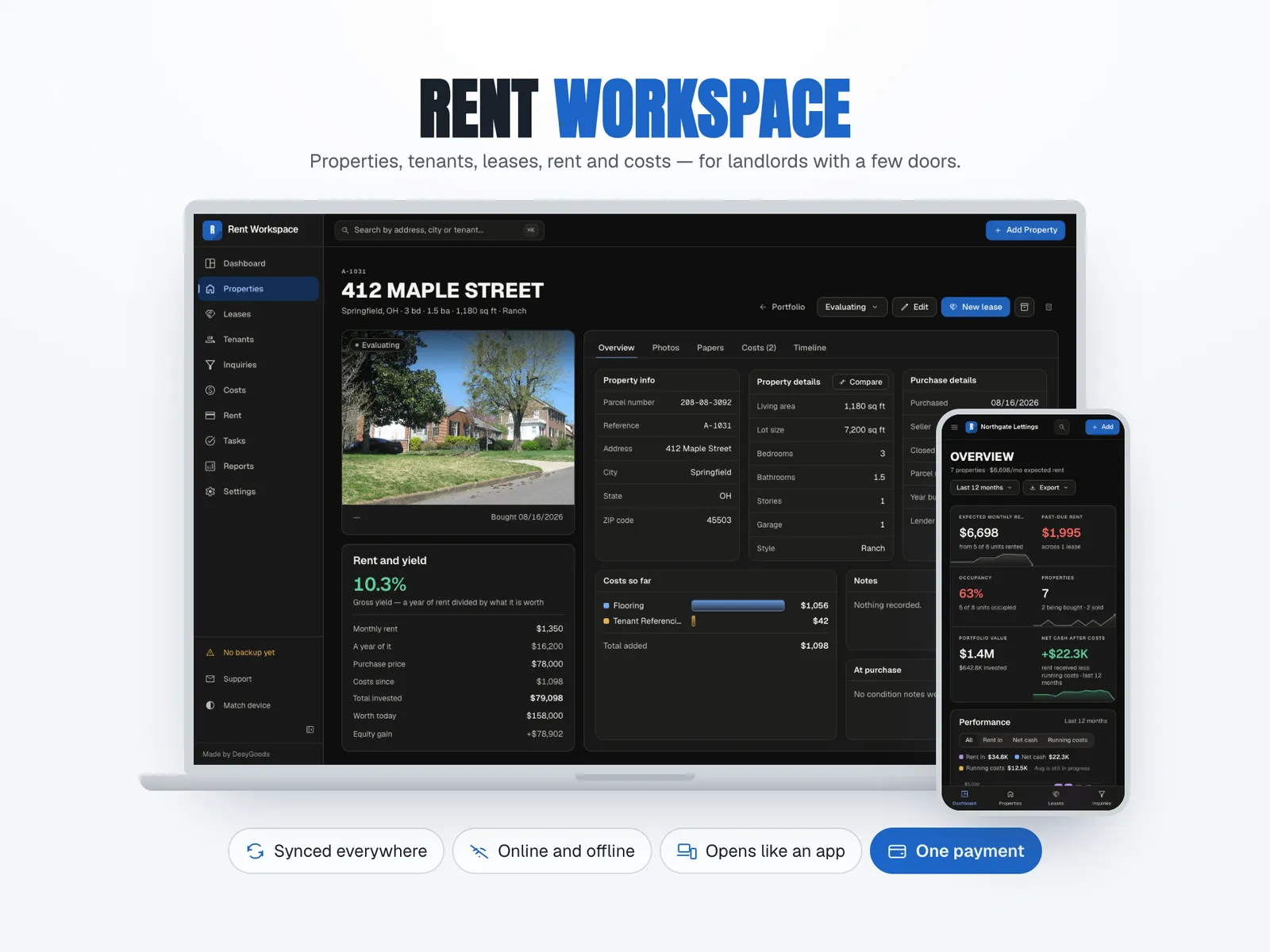
Rent in, costs out, and a number for each property that tells you what it actually earned — not what the rent was. That number is the one worth having all year, because it is what tells you whether a property is worth keeping, whether the last rent rise covered what the last boiler cost, and what you can afford to spend on the empty week between tenancies.
Per property, per month, in one place. Anything more elaborate stops being filled in by March.
Sets from this guide
Skip the blank page

Written for
Your line of work
Keep reading