What to keep in a hair stylist's client records
Formulas, patch tests, photos and what she spent — the record a chair actually needs, why the paper card keeps failing, and how to move a book of clients across without losing a Saturday.
3 min read · free to read, no sign-up
A stylist's client record is the business. It is the difference between "the same as last time" being a confident answer and being a guess with a developer in it.
Most chairs still keep it on cards in a drawer, and the cards work right up until the moment they do not: the handwriting from eighteen months ago, the card that went missing when the salon moved, the photo of a colour that lives in a camera roll with four thousand other pictures.
What belongs on a client's record
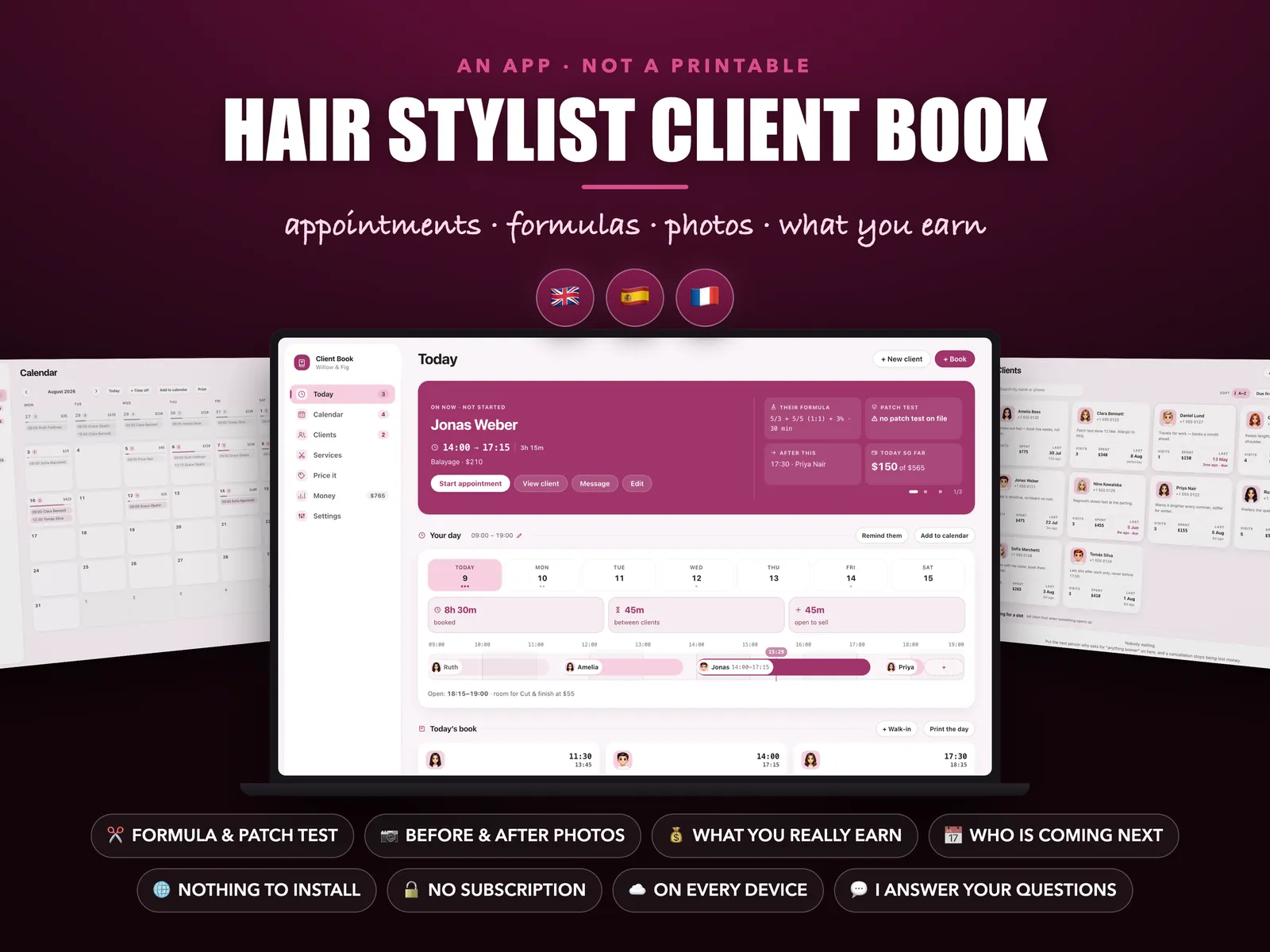
- The formula, in full: shades, grams, developer and the timing. "7.1 + 8.3" without the amounts is half a formula.
- The date of the last patch test, and the date the next one is due. This is the entry that protects you, not the client.
- Photos of the before and the after, attached to that visit rather than to a folder. A colour correction two years later is decided by the pictures.
- What she paid, and for what. A running total tells you who your regulars actually are, which is rarely who it feels like.
- The notes that are not hair: the sensitivity, the pregnancy, the wedding in June, the fact she hates a blow-dry that finishes flat.
The two records people skip and later need
The first is the correction that went wrong — what you did, what happened and what you would do instead. Nobody writes this one down, and it is the single most useful line in the book two years later.
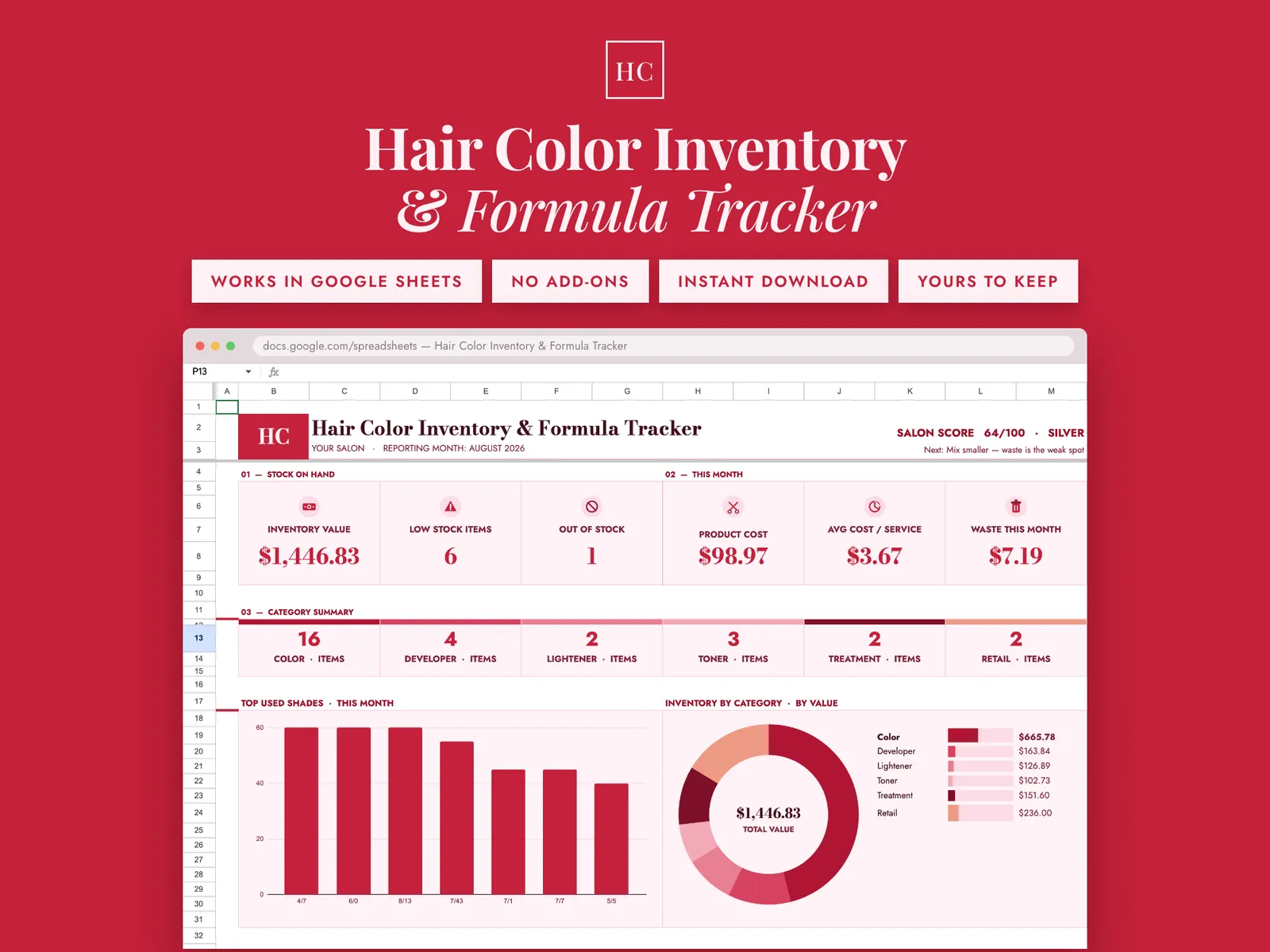
The second is product cost per head. The colour spend that comes out of the till at the end of the month has a story: which service, which shade, how much went down the sink. Without it, one treatment on your price list is quietly being done at cost.
Keeping it legal and private
Client records hold health information — allergies, medication, pregnancy — so they are personal data in every sense that matters. Keep them where only you can open them, do not share them in a group chat, and do not keep what you no longer need. Patch test dates are worth keeping precisely because they are what an insurer asks for after an incident.
Moving from cards without losing a weekend
- 1Do not migrate the drawer. Start with the clients booked in this month.
- 2Add each client as she sits down, from her card, while the colour is processing.
- 3Photograph every finished head from the same angle, and attach it to the visit.
- 4After one full booking cycle — six to ten weeks for most chairs — the regulars are all in with real history, and the drawer can be archived rather than copied.
Whatever you keep it in, the test is the same: can you find the formula from March in ten seconds while she is in the chair. Everything else is filing.
Sets from this guide
Skip the blank page
Written for
Your line of work
Keep reading