How to stop no-shows without charging everyone a deposit
Why people miss appointments, the four changes that fix most of it, and how to write a deposit policy that keeps clients rather than scaring them off.
3 min read · free to read, no sign-up
A no-show is not usually rudeness. It is a person who booked six weeks ago, forgot by week two, and by the morning of the appointment felt too embarrassed to message. Almost everything that reduces no-shows works by removing that embarrassment before it happens.
The four that do most of the work
- 1Book the next appointment while they are still with you. A slot chosen in the chair is remembered; a slot chosen in an evening DM three weeks later is not.
- 2Send two reminders: one 48 hours ahead, one the morning of. The first one is the one that matters — it is far enough out that they can move it instead of missing it.
- 3Make moving it easy and say so in the reminder. "Reply MOVE and I'll find you another slot" turns a no-show into a reschedule.
- 4Confirm what and how long. "Full head of colour, 2.5 hours, Thursday 10:00" prevents the person who thought it was a quick root touch-up and had to leave at eleven.
Deposits, without frightening people
A deposit works, but a blanket deposit on every appointment costs you the casual first-timer who would have become a regular. Put it where the risk actually is: new clients, long appointments, and anyone who has missed before. Everyone else keeps booking as they always did.
Write it as one plain paragraph, in the booking confirmation rather than only on the website: what the deposit is, what it comes off, how much notice you need, and what happens if they cancel late. Then apply it exactly as written, every time. A policy applied sometimes is worse than no policy at all — it reads as a mood rather than a rule.
The wording, when someone misses
"Sorry we missed you today — everything alright? Your slot is free next Tuesday at 2 if you want it." No lecture, no invoice in the first message. Most no-shows are mortified, and the ones who are come back if you make it easy. The fee conversation, where there is one, belongs in the second message.
Count them, per client
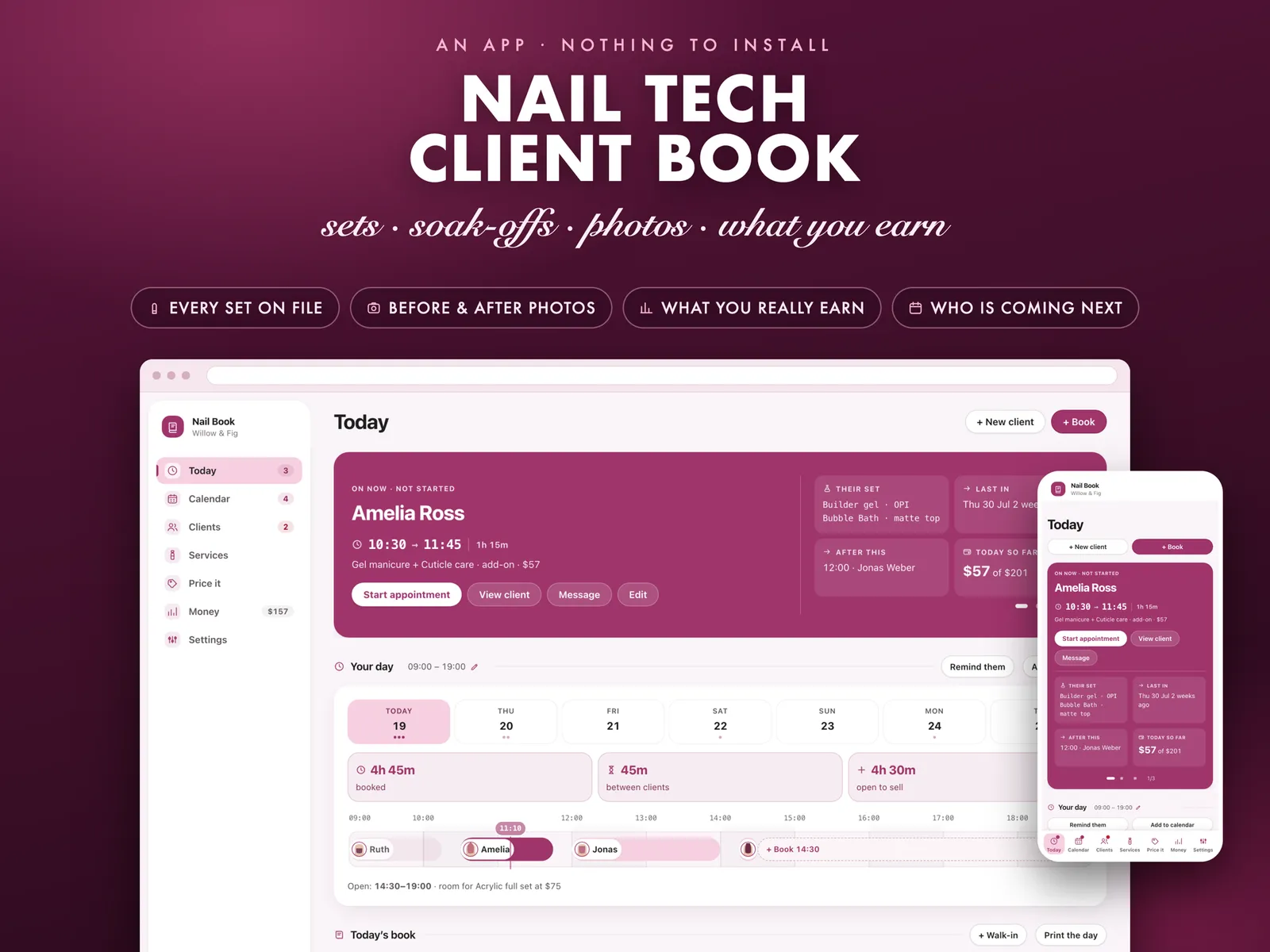
Write down who missed and when. Over three months the pattern is always the same: it is not everyone, it is four or five people. Those are the ones who get a deposit next time; the other ninety per cent never notice a policy at all, which is the point.
The number worth watching is not the no-show count. It is what the empty hours cost — hours times your rate, per month. That figure decides how much effort a deposit system is worth, and it is usually smaller or larger than people assume.
Sets from this guide
Skip the blank page

Written for
Your line of work
Keep reading